

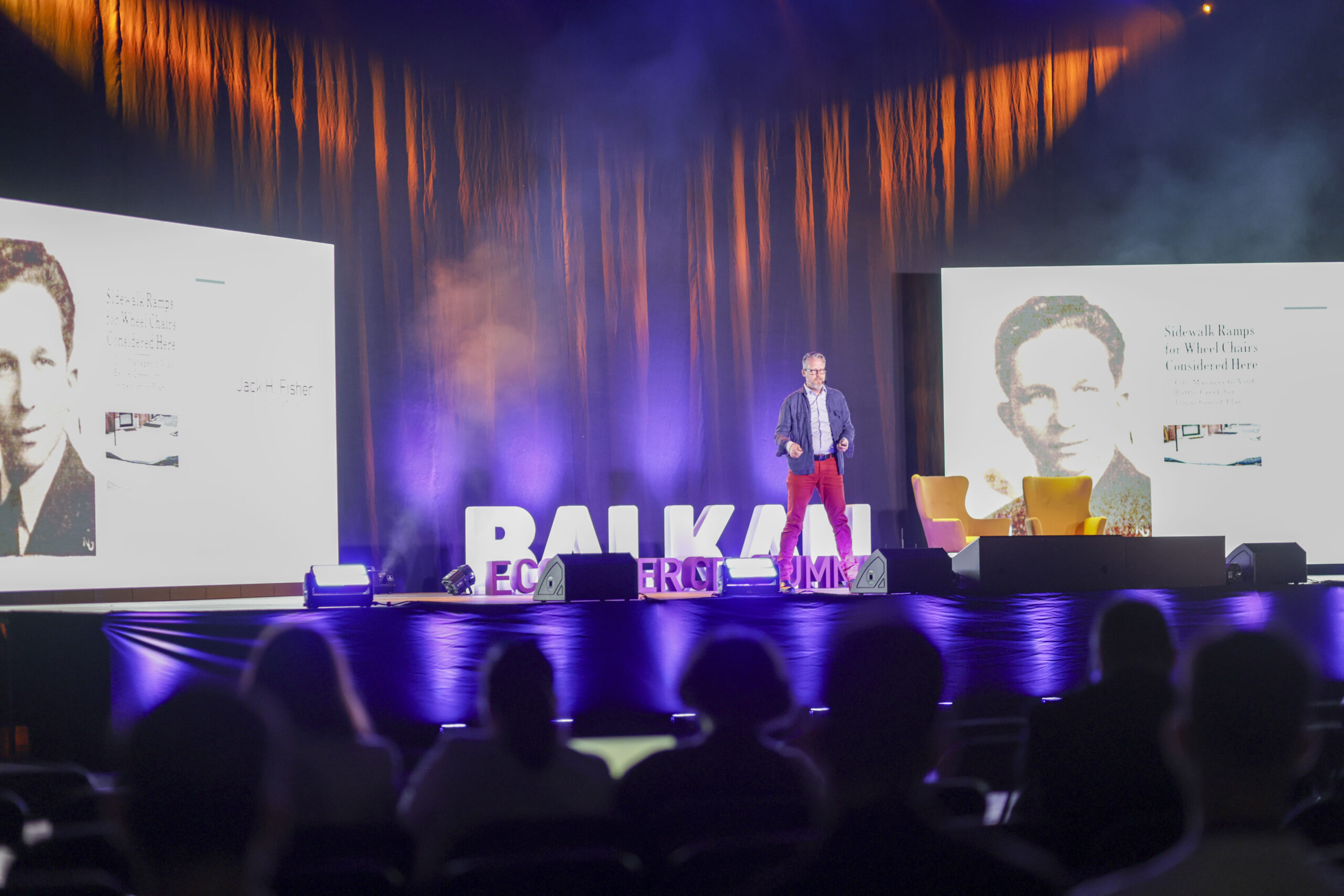
 At first glance, the phrase “web accessibility” might sound like a dry technical requirement – an item on a long compliance checklist, filed away by legal teams and forgotten by design leads. But in Ken Kralick’s keynote speech at the Balkan eCommerce Summit 2025, this notion was shattered. With sharp wit, deep expertise, and striking real-world examples, Kralick made one thing clear: web accessibility is not just a matter of compliance – it’s a business growth engine.
His message went further: by making websites more accessible, companies don’t just support people with disabilities – they unlock better performance for everyone.
From mobile users in sunlight to voice assistants and AI agents parsing web content, accessibility broadens your reach and sharpens your competitive edge. It’s not about meeting a standard – it’s about serving more people, more effectively.
The Hidden Productivity Crisis
“Are we paying attention?” Kralick asked the crowd early in his speech. The question wasn’t rhetorical. He highlighted how we often fail to recognize the invisible barriers that digital platforms create. From forms that can’t be navigated by screen readers, to CAPTCHA walls that are virtually impassable for users with disabilities, these barriers are silently draining productivity and revenue.
He pointed to the data: 61% of users are unlikely to return to a mobile site they had trouble accessing. 79% will go straight to a competitor. That’s not a marginal issue – that’s a business hemorrhage.
To truly understand the power of accessible design, Kralick turned to a powerful metaphor: the “curb-cut effect.” Originally installed in city sidewalks for wheelchair users, these sloped edges soon proved invaluable to a much wider range of people – parents with strollers, travelers with rolling suitcases, delivery workers, and even skateboarders. What began as an accommodation quickly became a universal benefit. Through this lens, Kralick emphasized that accessible web design isn’t just about helping a small group – it’s about improving the experience for everyone.
“Subtitles, typewriters, touch screens,” he said. “All innovations created for people with disabilities – and now part of our everyday lives.”
When we design for the margins, we end up creating better experiences for the masses.
Three Audiences, One Goal
Kralick broke down the audiences for accessibility into three categories, showing that accessible design reaches far beyond the obvious. By making websites accessible, businesses support not only users with disabilities but also people in everyday situations – and even the AI systems that help power modern search and automation. In short, design for access, and you serve more people than you ever imagined.
- People with permanent disabilities – from visual impairments to cognitive differences.
- People with situational limitations – like an injured hand, bright sunlight, or noisy environments.
- AI agents – yes, even the bots and machine learners benefit from well-structured, accessible websites.
This third audience was a show-stopper. “The Deep Dive,” as he calls it, is a concept where AI agents consume and interpret websites for the benefit of others – just like users with screen readers.
Accessible design is also machine-readable design. That means better SEO, better voice search results, and better AI integration.
The Conversion Killers We Ignore
If the business case wasn’t strong enough already, Kralick dropped a bombshell: Digital products that meet WCAG 2.0 standards are expected to outperform competitors by 50%. And yet, many businesses still neglect the fundamentals – broken forms, unlabeled buttons, and menus that fall apart on mobile.
“FIX. YOUR. FORMS,” he demanded. Not as a suggestion, but as a call to action.
He followed with one of the keynote’s most biting moments: a takedown of CAPTCHA technology. What’s marketed as a defense against bots, he argued, has become a barrier to entry for millions.
“I cleared a CAPTCHA to see this CAPTCHA,” he joked, drawing laughs – then silence – as the audience realized how exclusionary this design has become.
Even the tools meant to protect us can lock people out. Accessibility isn’t about adding features – it’s about removing friction. And for every obstacle removed, conversions go up.
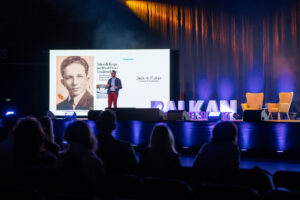
Kralick’s talk wasn’t just persuasive – it was paradigm-shifting. He reframed accessibility not as charity, nor legal necessity, but as strategic optimization. He closed with a sentiment that summed up the entire keynote:
“We’re not asking for equality. We just want access.”
That’s the human truth at the center of all this. And for smart businesses willing to listen, it’s also a roadmap to growth.
Whether you’re designing a checkout form, structuring your content for AI agents, or choosing whether to ditch that next CAPTCHA – remember that accessibility isn’t a feature. It’s the foundation.
The next chapter of this conversation is already in motion. The date for the Balkan eCommerce Summit 2026 has been announced – visit balkanecommerce.com to be the first to uncover what’s coming next at the region’s leading digital commerce event.