

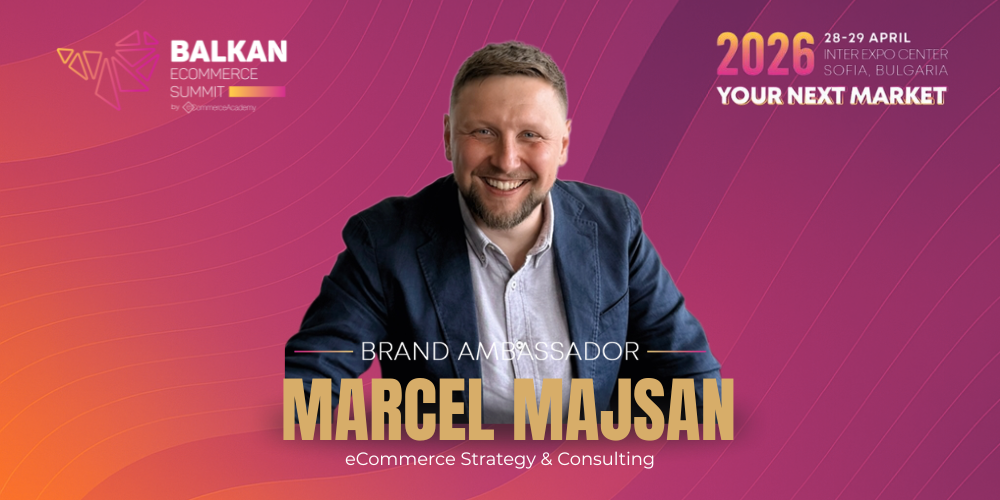
Building sustainable eCommerce growth in the Balkans is less about chasing traffic and more about earning trust. Marcel Majsan, founder and president of eCommerce Croatia, has spent over a decade raising standards across the Croatian market through trustmark certifications, industry research, conferences, and education. As a Brand Ambassador for the Balkan eCommerce Summit, he works to connect regional ecosystems that still operate too often in isolation.
In this interview, Marcel shares why trust remains the region’s biggest growth lever, what separates scalable eCommerce businesses from those that stagnate, and which practical shifts will define the next wave of cross-border growth across the Balkans in 2026.
As the founder and president of eCommerce Croatia, what motivated you to become a Brand Ambassador for the Balkan eCommerce Summit, and how do you see your role in strengthening regional cooperation across the Balkans?
My role is to be a bridge between the Croatian eCommerce community and other Balkan countries, but also to bring back the best ideas, partners, and momentum to Croatia. Our markets are naturally close, yet we still work too often like islands, as many of Croatian webshops still aren’t open to cross border sales. If we want stronger regional cooperation, we need more trust, more shared standards, and more cooperation between our communities. My job is to push exactly that.
You’ve spent years educating the Croatian market through conferences, trustmark certifications, surveys, guidelines, and now even a printed eCommerce magazine. From all these initiatives, what insights have shaped your understanding of what eCommerce businesses in our region truly need?
 After 10+ years of organizing conferences, research, education, and starting the trustmark, one insight keeps repeating – most eCommerce problems in our region are not marketing or UX problems.
Every survey and certification cycle tells the same story: shoppers want to feel safe, informed, and respected. That means transparent pricing, real stock status, predictable delivery, easy returns, and support that actually answers. Trust is still the main currency here, and many stores are still spending it like it’s monopoly money.
That’s why we push education, standards, guidelines, and trustmarks – to reduce friction and raise the standards.
Trustmark programs like safeshop.hr have transformed consumer confidence in Croatia. What impact have you seen on conversion rates and customer loyalty, and how could similar models benefit other Balkan markets?
Trustmarks don’t magically increase sales. They remove friction, and friction is what kills conversion in our region. What we’ve seen with safeshop.hr is that certified stores typically report stronger performance in the parts of the funnel where trust matters most – fewer “I’ll think about it” drop-offs, and better repeat purchase behavior over time. Also, we find customer reviews very important – one research showed 2-4 times increase in conversion rate (depending on price of goods sold) after showing at least 5 reviews on the webshop
For other Balkan markets, the value is even bigger because trust is still a regional bottleneck. A well-run trustmark creates a shared minimum standard – transparent policies, real seller info, compliant business practices, and consistent customer experience. It helps consumers choose faster, and it forces merchants to professionalize, which is good for everyone except the cowboys.
Your association connects more than 500 webshops with top service providers. What do the most successful eCommerce businesses have in common, and what mistakes do you see repeatedly across the ones that struggle to grow?
The most successful eCommerce businesses in our network sell cross border and they invest in logistics, customer support, and a reliable tech stack. They also build trust deliberately – clear delivery and returns, consistent communication, and a brand people actually remember.
The ones that struggle usually repeat the same mistakes – they chase traffic instead of fixing conversion, they run on discounts instead of differentiation, and they make decisions based on opinions instead of data.
You organize CRO Commerce, one of the most influential eCommerce conferences in Croatia. Based on what you see in your market, what trends will shape the next wave of eCommerce growth in the Balkans in 2026?
In 2026, the next growth wave in the Balkans won’t come from more ads. It’ll come from removing the last big frictions and scaling what already works.
1) Cross-border becomes the default playbook. More brands will be moving beyond “home-market only,” and the winners will be the ones who localize fast and execute regionally. We’ll also see extra momentum from Bulgaria’s euro adoption from Jan 1, 2026, which removes a very real mental and financial barrier.
2) Logistics gets even more automated and integrated. Faster intra-Balkan delivery, tighter integrations between couriers, marketplaces, and merchants, plus more automation in fulfillment.
3) Out-of-home delivery goes mainstream. Parcel lockers and pickup points are becoming a standard expectation across Europe (over 155,000 lockers and 44% choosing OOH delivery when offered)
4) Payments: less “cash-on-delivery forever,” more real digital adoption. COD dominance is still a growth brake in parts of the region, especially for automation and cross-border.
5) AI moves from hype to execution. Many businesses still lag (only 2% reporting AI tool usage in parts of the Western Balkans), so the upside is huge for those who apply AI to content, support, merchandising, and forecasting.
For founders and eCommerce managers across the region who want to build or optimize their strategy, what three areas should they focus on first if they want meaningful improvements within the next 6-12 months?
If you want meaningful improvements in eCommerce in our region, the priority is simple: remove friction and build trust.
Start with the basics that customers actually care about: transparent communication (delivery times, prices, returns), fast and human support, and a steady flow of real customer reviews. In the Balkans, trust isn’t just “nice-to-have” – it’s often the difference between checkout and close tab.
When people clearly see they can trust you, conversions go up in your home market. But the bigger win is that trust becomes portable – once you’ve built credible proof (especially reviews), it’s much easier to expand to other markets and scale faster, because you’re not starting from zero. That’s exactly where platforms like Safe Shop help – verified stores can showcase reputation and reviews across borders, not just locally.
Meet Marcel at Balkan eCommerce Summit 2026
Thinking about expanding cross-border in the Balkans? Wondering how to build trust that actually converts, or how to professionalize your operations without starting from scratch – or just curious what separates the webshops that scale from the ones that stagnate?
Marcel will be on-site, ready to share what 10+ years of trustmark certifications, research, and conferences have taught him about what really moves the needle in our region – from conversion friction points and customer reviews to cross-border playbooks and standards that work.
Whether you’re a Croatian merchant exploring regional growth, a founder from another Balkan market looking to raise standards, or simply want to connect with someone who’s been building bridges across the region for over a decad – come find him. These conversations often turn into partnerships.
🎟️ Grab your ticket at balkanecommerce.com and be part of building stronger connections across the region.