


If you want to understand which triggers matter most, how to launch profitable workflows without a large team, and what retention-focused operators should prioritize over the next 2-3 years, this conversation is a great starting point.
Alex Danchenko from Yespo is joining the Balkan eCommerce Summit 2026 in Sofia to share a practical playbook for turning email and CRM into a predictable revenue engine. In this interview, Alex breaks down why “sending more” is not a strategy anymore, and why trigger-based automation, paired with behavioral data and AI-powered personalization, consistently outperforms batch campaigns.
Alex, you’ll be joining us at Balkan eCommerce Summit in Sofia on April 28–29. What can attendees expect to learn from your session “Stop Spamming. Start Triggering”?
In this session, I’ll focus on something very practical: how to move from mass campaigns to behavioral automation that actually drives revenue in 2026.
Most teams still operate in the mindset of “sending more messages.” Instead, we’ll talk about activating the right trigger-based campaigns at the right moment – product views, search behavior, abandoned carts, back-in-stock events, and repeat purchases.
Attendees will learn:
- why orchestrating user journey with behavioral triggers consistently outperforms broadcast campaigns in both revenue and engagement;
- which 10 trigger-based workflows are the most profitable for ecommerce today;
- how AI-powered personalization makes direct channels high-ROI revenue drivers;
- how to launch these workflows in weeks, not months, even without a large team.
In addition, I’ll show how all of this works in practice through a real international ecommerce case, where trigger-based workflows and behavioral personalization became a systematic revenue growth engine, not a one-off experiment.
This will be a highly practical session. The goal is for attendees to leave with a clear understanding of which triggers to activate next to build predictable revenue.
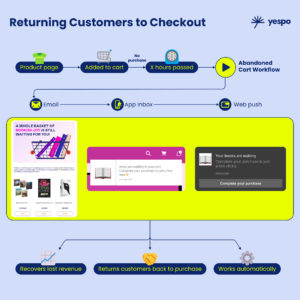
How Abandoned cart trigger works
Many brands still rely on batch campaigns and newsletters. Why do you believe trigger-based workflows are the real revenue driver in 2026?
Because behavior beats schedules – and personalization has become table stakes for customers. Our own performance data shows behavior-based triggers deliver:
- roughly 10× higher CTR than mass campaigns;
- conversion rates that are around 70 % higher than in batch workflows.
External evidence confirms the broader trend: about 77% of consumers expect personalized experiences when shopping online.
In 2026, customers expect relevance, timing, and personalization by default. Triggered workflows deliver that because they:
- react to real intent, not assumptions;
- work continuously in the background;
- scale revenue without scaling team workload;
- and consistently outperform broadcast campaigns in conversion and lifetime value.
That’s why trigger-based automation has moved from a “nice to have” to a core revenue engine for ecommerce brands.
You work with over 4,000 eCommerce brands. What separates companies that use automation effectively from those that simply “send more messages”?.
The key difference lies in how teams organize their work and where they spend their time.
Companies that use automation effectively make better use of their resources. Trigger-based workflows are set up once and then run reliably in the background, responding to customer behavior and driving conversions without daily manual effort. Automation reduces operational workload, frees up time for analysis, testing, and strategy development, and allows teams to scale results without proportional team growth.
Our clients’ cases prove this in practice:
- trigger-based workflows generate over +10% additional revenue from direct channels;
- deliver +20% growth in repeat purchases;
- and in some cases, simply adding triggers increased email channel revenue by up to +30%.
Teams that rely primarily on manual campaigns need to continuously maintain sending volume, which tends to deliver short-term results.
Effective automation isn’t about sending more messages.
It’s about building a system that runs continuously, optimizes team time, and directly impacts revenue.
For eCommerce leaders attending the Summit, what is one mindset shift they must make to stay competitive in the next 2–3 years?
Businesses need to shift their primary focus from customer acquisition to effective retention. CAC continues to rise, while retaining a customer costs on average 15 times less. The real growth opportunity lies not in driving additional traffic, but in maximizing the value of customers you have already acquired. Loyal buyers return again and again, generating stable long-term revenue. Increasing retention by just 5% can boost profitability by 25%.
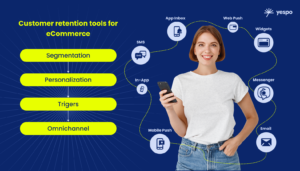
To make retention work at scale, companies need to:
- consolidate all customer data into a unified customer profile – a critical foundation for high-quality personalization;
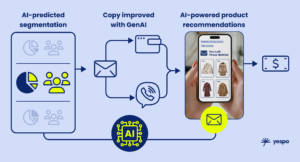
- use segmentation and AI to predict churn and purchase intent;
- implement product recommendation engines powered by advanced AI algorithms that can operate with incomplete data, understand the context of a customer’s actions, and generate highly accurate offers with a strong likelihood of conversion;
- build strong omnichannel engagement, as brands with mature omnichannel strategies retain up to 89% of their customers;
- ensure full lifecycle engagement through automated trigger-based communications.
In the coming years, competitive advantage will belong to brands that can systematically turn every interaction into long-term value. Those who learn to operate data, personalization, and AI as a unified retention system will continue to grow – even in an environment of rising CAC and intense competition.
AI and personalization are everywhere in the conversation today. In your experience, where do most companies overestimate AI – and where do they underestimate it?
Some companies see AI as a “magic button”. But AI alone won’t fix fragmented customer data, unclear goals, or chaotic processes.
At the same time, many companies still underestimate AI in very practical areas that directly impact revenue:
- behavior-based product recommendations;
- predicting future customer actions – who is likely to buy soon and who is starting to disengage
- improving team efficiency and reducing manual errors;
- reducing the volume of irrelevant messages;
- enhancing both mass and trigger-based campaigns with real-time personalization.
This is where AI delivers real, measurable value today.
Why should eCommerce professionals not miss Balkan eCommerce Summit this April in Sofia? What makes events like this strategically valuable?
Balkan eCommerce Summit brings together eCommerce professionals from across the region, and that’s what makes it strategically valuable for us. We’ve already been there twice and are coming back for the third time, because it’s not just about listening to talks – it’s about real conversations with people who are actually building the market. You get a very clear sense of where the CEE region is heading, especially with AI becoming a real part of commerce and customer experience. And honestly, networking is a big part of it – we’ve met strong businesses and thought leaders there, and many meaningful partnerships start from those face-to-face discussions.
Meet Alex at Balkan eCommerce Summit 2026
Join Alex’s session in Sofia on April 28–29 and bring your questions about retention, triggers, and automation that drives revenue.
🎟️ Grab your ticket at balkanecommerce.com and be part of building stronger connections across the Balkans.