


In eCommerce, growth has long been driven by acquisition – more traffic, more campaigns, more channels. But as competition intensifies and customer acquisition costs continue to rise, this model is becoming harder to sustain. More brands are starting to realize that long-term success depends not on how many customers you acquire, but on how many you keep and how deeply they connect with your brand.
At Balkan eCommerce Summit 2026, Stefy Krushkelova, Founder of NOVARA Consulting, brings a perspective shaped by experience across global brands, growth-stage companies, and international markets. Her work focuses on building communities, partnerships, and customer systems that turn one-time buyers into long-term advocates.
In this interview, we explore why retention and community are becoming the true drivers of growth, what most brands misunderstand about engagement, and how eCommerce businesses can build stronger, more valuable relationships with their customers.
Stefy, you’ve worked across marketing, sales, partnerships, and community building. How has this shaped your view on what actually drives sustainable growth in eCommerce today?
Starting my career at Nestlé, where I contributed to a major brand partnership that integrated content strategy, PR, media, and communications, gave me early exposure to how strong brands are built and sustained over decades.
Later, moving into growth-stage eCommerce companies exposed me to a completely different environment, one where speed and performance metrics dominate decision-making.
Seeing both worlds shaped my perspective on growth. The brands that sustained momentum were not always the fastest-growing ones, but the ones that built trust, delivered consistent value, and created relationships that extended beyond a single purchase.
I went a step further and became a brand ambassador for brands I genuinely believed in. That experience gave me a deeper understanding of what builds long-term brand preference and why customers choose to stay loyal over time.
All of this shaped my view on sustainable growth in eCommerce today. It is no longer defined only by acquisition volume, but by durability, retention, and the strength of the relationship between the brand and the customer.

Over the past six years, I have focused on leading community and customer programs designed to improve retention, advocacy, and long-term customer value across multiple markets and channels.
Many brands focus heavily on acquisition. Why are community and retention becoming the real growth drivers, especially in competitive eCommerce markets?
Acquisition can feel powerful, but retention creates stability. Paid acquisition costs have increased across every major channel, and brands that built their growth entirely on paid traffic are now under pressure.
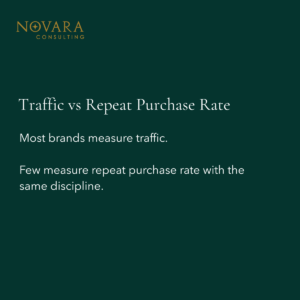
You cannot buy the moment when a customer recommends your product to someone they trust. That moment is earned over time. Historically, acquiring a new customer has always been more expensive than retaining an existing one, but today the gap is becoming even wider. One-time buyers are not only less profitable. They also create risk.
Sustainable growth now depends on what happens after the first purchase. The brands that succeed are the ones that extend the customer relationship and increase the value created over time.
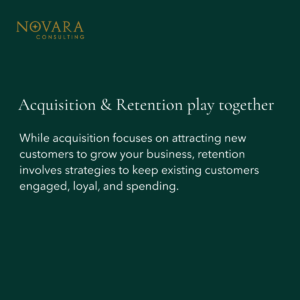
In markets like the US and the UK, this shift happened several years ago. The Balkan market is now reaching the same point. Consumer trust is harder to earn, competition is increasing, and the cost of losing customers is becoming impossible to ignore.
Sustainable growth in eCommerce has become a question of identity and loyalty. When customers feel connected to a brand and feel that they belong, retention becomes a natural outcome. That is the space where I bring the most value today.
From your experience, what are the most common mistakes brands make when trying to build a community, and why do most of them fail to create real engagement?
The most common mistake is treating community as a content distribution channel. Brands publish announcements, run promotions, and create branded hashtags, and then wonder why engagement remains low. A strong community is built through conversation and participation. People want to feel seen and heard, not targeted with messages.
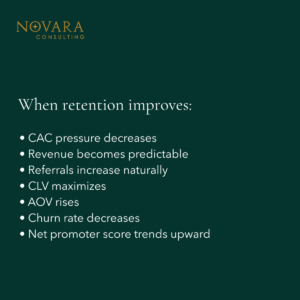
Another mistake I see very often is measuring the wrong indicators. Follower counts and post reach do not define community strength. Impressions and likes alone do not reflect loyalty. More meaningful indicators include repeat purchase rate, referral activity, and year-over-year customer behaviour. These numbers show whether a community exists and whether it contributes to real business growth.
You’ve developed ambassador, affiliate, and partnership programs across multiple markets. What separates the ones that actually drive revenue from those that remain just a marketing experiment?
I have worked on ambassador and partnership programs across the US, European, and Australian markets, and one factor always makes the difference. Selection and alignment matter more than reach. Many programs fail because brands choose people based on audience size rather than genuine connection to the product. The programs that generate consistent revenue involve people who already use the product, believe in it, and speak about it naturally.

Structure and continuity also play an important role. Revenue-generating programs are built over time. When a brand stops investing in relationships, these programs lose momentum. Brands that treat customer programs as short-term acquisition tactics often feel disappointed with the results.
Many eCommerce brands run their business on Shopify or Amazon. How does community building and affiliate marketing look different depending on which platform you’re on?
The biggest difference comes down to ownership. On Shopify, you control the relationship with your customer. You have access to their data, you can design the full journey, and you can create experiences that extend beyond the transaction.
In my work, I usually start with building the right foundation. That includes defining the retention and community strategy, structuring the customer journey, and identifying the moments where engagement and advocacy can naturally grow.
Amazon plays a different role. It is incredibly strong for discovery and first-time purchases, but the relationship with the customer remains limited. For brands that are early in their journey and primarily selling on Amazon, Amazon Associates can be a practical way to test affiliate marketing and understand what resonates with customers. Over time, however, the brands that see sustainable growth are usually the ones that invest in owned channels alongside marketplace visibility. Shopify creates the space where long-term relationships can actually develop.
What about TikTok and Instagram? How do they fit into an affiliate strategy for eCommerce brands?
What has changed in recent years is the way both platforms have integrated commerce directly into the user experience. TikTok Shop and Instagram affiliate tools now allow creators to tag products and earn commissions directly on the platforms. That shortens the distance between discovery and purchase.
In practice, TikTok and Instagram function as the amplification layer of an affiliate strategy. This is where discovery happens, where creators introduce products to new audiences, and where early interest is generated.
From an execution perspective, this is where campaign design becomes critical. It is not only about choosing creators, but about aligning messaging, timing, and incentives with the broader customer journey. When social campaigns are connected to a well-structured affiliate or ambassador program, they become significantly more effective and sustainable.
The brands that use these platforms successfully do not treat them as isolated channels. Instead, they connect them to a broader system that includes Shopify or another owned environment. Social platforms help spark interest and create visibility, while owned channels support the relationship and encourage repeat behaviour over time.
If an eCommerce brand wants to improve LTV and build a loyal customer base in the next 6–12 months, what should be their first priority?
Their priority should be understanding why customers leave. Before investing in loyalty programs, community platforms, or retention campaigns, brands need to do the diagnostic work.
There is another important point, especially for founders who are newer to eCommerce. Much of what they know about marketing, sales, and business development will need to be adapted for this space. The dynamics are different, the customer journey is different, and customer behaviour is shaped by different expectations.
Start with honest curiosity about your existing customers. Everything else follows from that.
Meet Stefy Krushkelova at Balkan eCommerce Summit 2026
If you want to move beyond one-time purchases, build a loyal customer base, and turn your community into a real growth engine, this is a session worth attending.
🎟️ Grab your ticket at balkanecommerce.com and learn how to build relationships that drive long-term eCommerce success.