

Bosnia and Herzegovina, recognized for its rich history and evolving economy, is experiencing a transformative shift towards digitalization. From 2021 to 2023, the nation has made significant strides in eCommerce adoption, presenting both opportunities and challenges for businesses navigating this rapidly changing landscape.
The Numbers Behind the Digital Shift
- 2021: 75.5% of households had internet access, marking the start of a steady rise in digital connectivity.
- 2022: Internet access sticks to 75.9%
- 2023: A slight climb to 81.6%, signaling a shift towards digital integration in households.
Consumers didn’t just go online – they embraced eCommerce
- Clothing and footwear emerged as the dominant category, capturing 59.1% of online purchases by 2023.
- Electronics and household appliances followed with 19.3%, reflecting growing tech adoption.
- Food delivery services rose to 21%, highlighting a shift toward convenience.
- Furniture, home accessories (e.g. carpets or curtains) or gardening products. with 25.4%
Platforms and Preferences
- In 2021, enterprise adoption of eCommerce platforms was low, with fewer than 10% actively using their own websites or apps.
- By 2022, this figure grew to 12.5%, while reliance on marketplaces increased to 11.3%.
- In 2023, 13.6% of enterprises used their websites or apps for online sales, and 12.7% relied on third-party marketplaces like Ekupi.ba, Domod.ba. These figures demonstrate steady progress in digital adoption among businesses, with an increasing shift toward leveraging both proprietary and third-party platforms to reach consumers effectively.
Consumer Engagement
Younger demographics (16-34 years) consistently dominated ecommerce, favoring categories like fashion and electronics. The use of mobile devices surged to 95.2% of households in Bosnia and Herzegovina owned mobile phones in 2023, with ecommerce playing a growing role in online shopping.
Although specific percentages for mobile sales are not available, the increasing reliance on smartphones and tablets for internet access and shopping highlights the transformative impact of mobile technology.
A Closer Look: Trends and Challenges
Frequency of online shopping:
- In 2021, occasional online shopping was more common, with just 35% of consumers making 1-2 purchases every three months.
- By 2022, this increased to 42%, and in 2023, nearly 49.3% of consumers shopped online 1-2 times within the same period, reflecting heightened digital engagement.
Last time consumers made online purchases:
- In 2023, 30.4% of internet users made a purchase in the last three months.
- 10.9% made a purchase between three months and one year prior.
- 7.2% had made a purchase over a year ago.
- Notably, 51.5% of internet users have never made an online purchase, reflecting a significant opportunity for growth in consumer adoption.
Online shopping preferences:
- Among users who made online purchases in the last three months:
- 74.6% purchased from local sellers.
- 25.5% purchased from sellers in the EU.
- 24.8% purchased from sellers in other countries outside the EU.
- 5.2% of respondents did not know the seller’s country of origin.
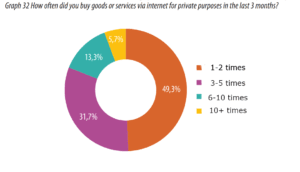
Frequency of online purchases:
- In the last three months:
- 49.3% of respondents made 1-2 purchases.
- 31.7% made 3-5 purchases.
- 13.3% made 6-10 purchases.
- 5.7% made more than 10 purchases.
- 79% of respondents reported no issues during their transactions, indicating improving consumer trust.
Barriers Holding Back Growth
Despite its promise, Bosnia’s eCommerce market struggles with key hurdles:
- Logistical Challenges:
- High shipping costs and delivery delays, particularly in rural areas, remain significant barriers.
- Trust in Online Payments:
- According to research in 2022, cash-on-delivery was the most popular payment method, accounting for 53.8% of transactions. Other payment methods included card payments (32.8%), PayPal, AliPay, and similar services (9.7%), bank transfers (1.9%), and bank money transfers (1.8%).
The Game-Changer: The Balkan eCommerce Summit 2025Balkan eCommerce Summit 2025, founded by Nikola Ilchev, is an unique eCommerce forum for the Balkans, scheduled for April 29-30, 2025, at the iconic Arena Sofia in Bulgaria. This two-day event promises to be an unparalleled gathering of over 4,000 attendees, including eCommerce experts, business owners, and leaders from over 20 countries. Balkan eCommerce Summit 2025 bridges gaps, unlocks opportunities, and accelerates digital transformation in the Balkan region.

What to expect?Grand Expo and networking opportunities
- 200+ exhibitors from diverse sectors, including SaaS, logistics, and digital marketing,.
- Private meeting spaces will be available to foster valuable connections with key partners, investors, and industry peers.
- Balkan-style party featuring live performances, creating an atmosphere for informal networking and celebration.
Inspiring keynote speakers and sessions- World-class speakers such as: Jeff Hoffman, Pascal Brochier, Ahmed Hassan, David Henzel and Martin Greif
- Conference sessions will cover digital transformation, leadership, and emerging eCommerce trends, equipping attendees with actionable strategies for business growth.
The opportunity you cannot missBosnia’s digital transformation from 2021 to 2023 has set the stage for eCommerce to become a cornerstone of the country’s economy. The Balkan eCommerce Summit 2025 represents a turning point – an opportunity to overcome challenges and seize the promise of regional integration. Take this chance to stay ahead in the fast-paced eCommerce landscape and connect with key players shaping the future of the industry.
Your competitors are going to be there – will you? Learn more and get your tickets today at balkanecommerce.com
- Logistical Challenges: