

In a region where ad costs keep rising and tracking keeps getting harder, many brands still treat performance marketing as “Meta + Google, maybe a bit of influencers.” Yet one of the most scalable, low‑risk growth channels is hiding in plain sight: affiliate marketing.
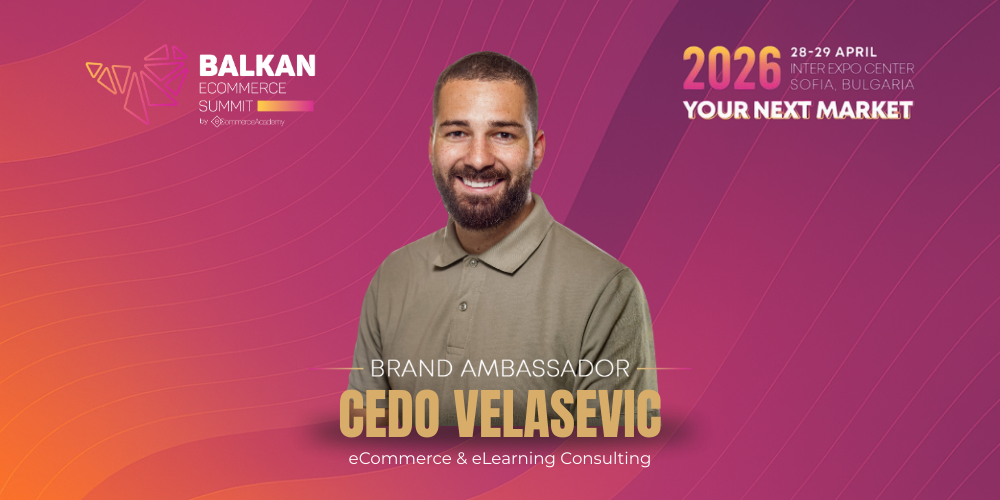
Few people see this more clearly than Čedo Velašević. A leading eCommerce and affiliate marketing expert with deep hands‑on experience across Croatia, Slovenia, Serbia, and Montenegro, Čedo serves as Country Manager at Dognet, one of the most established affiliate networks in the region, and is co‑founder of the eCommerce Association of Montenegro. Every day, he works with brands that want to grow not just by spending more on ads, but by building structured, win‑win partnerships.
In this conversation, Čedo explains why affiliate marketing remains one of the most underused growth levers in the Balkans, where the biggest missed opportunities lie, and how local brands can move from ad buying to true partner management. As a Brand Ambassador for the Balkan eCommerce Summit, he also shares his vision for stronger regional collaboration – and why the Summit is becoming the key meeting point for building a unified, competitive Balkan eCommerce ecosystem.
Affiliate marketing is still underused in many Balkan markets. What are the biggest missed opportunities you see for local eCommerce brands today?
The biggest missed opportunity is predictable, risk‑free scalability. While many brands are trapped in the “spending loop” of rising Meta and Google CPCs, pioneers in the region have already shown there’s a better way.
Look at Shoppster.rs in Serbia. They didn’t just launch an affiliate program; they built a system of lifetime value. By offering a fixed CPA for the first purchase and a “lifetime” commission for every subsequent order from that customer, they’ve turned affiliates into long‑term business partners, not one‑time traffic sources.
Most local brands still don’t think this way. They see affiliates as “one more channel” instead of as a distributed sales force that can handle the entire trust‑building phase – education, reviews, comparisons – far better than any standard display ad ever could.
The real missed opportunity is this:
- Treating affiliates as strategic partners who help you win the customer’s trust
- Building commission models that reward long‑term value, not just the last click
- Letting partners speak in their own voice, on their own platforms, to audiences that already trust them
Brands that understand this shift can grow faster with less risk, because they pay mainly when real sales happen – not just impressions or clicks.
From your work across Croatia, Slovenia, Serbia, and Montenegro, what are the key differences brands should be aware of when building affiliate or CPA-based growth strategies in the region?
Cultural and technical maturity vary across the region, and we see this very clearly in how successful campaigns are structured:
- Croatia & Slovenia
These markets are technically advanced. International brands with a local presence leverage professional networks like Dognet to manage high‑volume traffic.
In Croatia, we see a strong focus on niche authority. If you’re selling tires, for example, you partner with automotive portals that provide deep technical content – as seen with **Gume.com.hr’s 3% commission model**. This kind of collaboration builds both trust and volume. More and more local brands are now using affiliate marketing as one of their new online sales channels with very positive results. - Serbia
Serbia is a market of scale. Here, Shoppster has pioneered a “Guru” vs. “Standard” partner tier system, recognising that high‑performing affiliates need different incentives, more tools, and closer relationships.
The challenge in Serbia remains the high share of Cash on Delivery (COD). To succeed, brands need a robust tracking and validation system that can account for returns and cancellations, so that commissions reflect real, completed orders. - Montenegro
Montenegro is still very much a “personal touch” market. Growth here is less about massive affiliate networks and more about direct partnerships and localised influencer strategies. Relationships, local reputation, and community trust play a big role in how campaigns are built and measured.
Understanding these nuances helps brands avoid copy‑paste strategies. An affiliate model that works in Slovenia might need different incentives, tracking logic, or partner types to perform in Serbia or Montenegro.
Many merchants want performance-driven growth but struggle with execution. What are the first 2-3 steps an eCommerce business in the Balkans should take to launch a successful affiliate program?
The first step is to align commissions with your margins and category strategy. You cannot copy‑paste “10% for everyone” if your margin is 12%. Successful players like Emmezeta use category‑based commissions (for example 3% for furniture versus 2% for electronics) to protect their bottom line while staying competitive for affiliates.
Second, whether you use a regional network like Dognet or any of the global ones, transparency is non‑negotiable. If an affiliate cannot trust your data, they will take their traffic elsewhere.
That is why you must use technology that affiliates trust. To this end, Dognet has pushed its Dognet 2.0 technology to provide high transparency, ensuring both merchants and publishers have undeniable, real‑time data on every conversion. When everyone sees the same numbers, collaboration becomes much easier.
Third, my very concrete advice for eCommerce players is to create “Ready‑to‑Use” assets. Balkan affiliates often do not have large creative teams. Providing:
- High‑quality banners in the right formats
- XML feeds, which are crucial for price comparison publishers or CSS publishers (where available)
- Pre‑written copy, angles, or campaign concepts
…can be the difference between a program that just exists in your internal slides and a program that actually converts.
Start small, with a clear structure and strong support for partners. Then iterate based on what the numbers – and your affiliates – are telling you.
Education is a big part of your work. What skills or mindset shifts do marketing teams and affiliate managers in the Balkans need most to compete at a European level in the next few years?
We need to move from “Ad Buying” to “Partner Management.” An affiliate manager is not just someone who looks at a dashboard. They are:
- A recruiter – constantly identifying, approaching, and activating new partners
- A negotiator – structuring win‑win deals, bonuses, and tiered incentives
- A data analyst – understanding which partners, placements, and paths actually drive profitable growth
The mindset shift is also about attribution. Regional teams often struggle with “last‑click” versus “assisted” conversions. To compete in Europe, we must understand that an affiliate might provide the initial education and trust that leads to a sale three weeks later, even if another channel captures the final click.
Brands that understand the full funnel and reward partners accordingly will win the next decade of eCommerce growth. Those that only reward the last click will keep underinvesting in the content, reviews, and comparisons that actually convince people to buy.
As a co-founder of the eCommerce Association of Montenegro and a Brand Ambassador of Balkan eCommerce Summit, how do you see the Summit helping performance marketers and brands build stronger regional partnerships?
 The Balkan eCommerce Summit 2026 in Sofia is the place where the “Balkan Digital Silk Road” truly comes to life. It is where the theory of regional expansion meets the reality of networking.
For a brand in the CEE region, including Montenegro, the Summit is a shortcut. Instead of spending months trying to find the right partners in the ecommerce world in Bulgaria or Romania, you can meet them in one room – networks, agencies, publishers, logistics providers, payment solutions, and fellow merchants.
It is about building a unified regional ecosystem where we stop competing only in small, fragmented markets and start operating as a collective powerhouse of 50+ million consumers.
For performance marketers and affiliate managers, this means:
- Meeting the right partners face to face
- Learning from concrete case studies from across the region
- Aligning on standards, expectations, and tech that make cross‑border cooperation easier
In other words, the Balkan eCommerce Summit is not just an event. It’s the annual checkpoint for everyone who believes that Balkan eCommerce can grow faster, smarter, and more collaboratively than ever before.
Meet Čedo at Balkan eCommerce Summit 2026
Are you wondering how to scale performance marketing beyond rising Meta and Google costs? Curious about why affiliate marketing remains so underused in the Balkans despite being one of the most predictable, risk-free growth channels, or how to turn affiliates into long-term business partners instead of one-time traffic sources?
Čedo will be on-site to share what years of building affiliate networks across Croatia, Slovenia, Serbia, and Montenegro have taught him – from category-based commission structures and transparency requirements to the “Ready-to-Use” assets that turn programs from internal slides into actual conversions, and why regional cooperation through events like the Summit is becoming essential for anyone serious about Balkan eCommerce growth.
Whether you’re a brand exploring affiliate marketing for the first time, a performance marketer looking to move from “ad buying” to “partner management,” or simply want to understand how pioneers like Shoppster turned affiliates into a distributed sales force with lifetime value models – come find him. These conversations often turn into partnerships.
🎟️ Grab your ticket at balkanecommerce.com and be part of building stronger connections across the region.