

Croatia offers a promising digital marketplace for international entrepreneurs, with 31% of consumers actively purchasing online and 76% of transactions involving international sellers. The market has grown from $725 million in 2020 to $1.1 billion in 2024, representing a 9.3% annual growth rate and significant opportunities for cross-border commerce.
Table of Contents
- Understanding the Croatian eCommerce landscape
- How to start an eCommerce business – Essential first steps
- Legal requirements and business registration in Croatia
- Building your eCommerce website and online presence
- Payment methods and logistics for Croatian customers
- Marketing strategies for Croatian eCommerce success
- Starting an eCommerce business from scratch – Practical tips
- Costs and funding options for your Croatian eCommerce venture
- Growing and scaling your eCommerce business in Croatia
- Frequently Asked Questions
Considering expanding your eCommerce business into Southeast Europe? Croatia offers a promising digital marketplace for international entrepreneurs. With a growing online consumer base and increasing cross-border transactions, understanding the nuances of the Croatian eCommerce landscape is crucial for success. For a comprehensive overview of Croatia’s eCommerce market, this guide provides everything from market analysis to legal requirements and marketing strategies. You can also gain insights from successful entrepreneurs who have navigated the Croatian market. Let’s dive into what makes Croatia a compelling opportunity and how you can capitalize on it.
Understanding the Croatian eCommerce landscape
 What makes Croatia attractive for eCommerce businesses?
Croatia’s digital marketplace offers a compelling opportunity for international entrepreneurs aiming to establish an online presence in Southeast Europe. The Croatian market presents unique characteristics that make it attractive for cross-border commerce.
Current data indicates that 31% of Croatian consumers actively purchase products online, with 76% of these transactions involving international sellers. This cross-border shopping behavior provides an immediate entry point for foreign businesses looking to gain market share without needing extensive local infrastructure.
Croatian eCommerce market growth potential
The market demonstrates growth potential, with projections showing expansion from $725 million in 2020 to $1.134 billion by 2025, representing an annual growth rate of 9.3%. User penetration rates are expected to increase from 54.8% to 65.8% during this period, indicating increasing digital adoption among Croatian consumers.
- Fashion: Accounts for 42% of total revenue, leading all product categories
- Electronics & Media: Represents 23% of market share with strong consumer demand
- Food & Personal Care: Comprises 13% of the market with growing health consciousness
- Toys, Hobby & DIY: Makes up 12% with seasonal shopping patterns
- Furniture & Appliances: Represents 9% with higher average order values
Croatian consumers show distinct shopping behaviors that entrepreneurs can leverage. Price sensitivity is a key characteristic, with delivery costs, product pricing, and shipping timeframes serving as primary decision factors. Many consumers research products online before buying offline, highlighting the importance of building trust through digital touchpoints.
The infrastructure supporting online commerce continues to improve, with multiple airports and well-developed railway connections facilitating efficient logistics. Social media penetration exceeds 50% of the population, providing channels for customer acquisition and engagement through platforms like Facebook and Instagram.
Now that you understand the potential of the Croatian eCommerce market, let’s explore the essential first steps to launching your online venture in this dynamic landscape.
How to start an eCommerce business – Essential first steps
How to identify profitable opportunities in Croatia
Launching an online venture in Croatia requires a systematic approach that addresses market opportunities and regulatory complexities. Your first step should be conducting market research to identify profitable niches within the Croatian consumer landscape.
- Analyze the most popular product categories among Croatian online shoppers: clothing and apparel, entertainment tickets, consumer electronics, travel services, and computer equipment
- Research emerging trends in health, beauty, and home improvement, which show promising growth potential
- Study Croatian consumer psychology to understand their price-sensitivity and preference for quality international brands
- Evaluate the regulatory landscape and engage with organizations like eCommerce Hrvatska Association for guidance
- Select your business model (dropshipping, inventory-based retail, or digital products) based on your resources and goals
- Plan your payment infrastructure early, focusing on credit cards, mobile payments, and PayPal integration
- Analyze successful international brands already operating in Croatia to establish competitive positioning
Understanding Croatian consumer psychology is crucial for positioning your offerings. Local shoppers are price-sensitive but appreciate quality international brands. They often conduct online research before purchasing, meaning your digital presence must build trust and provide product information.
The regulatory landscape presents challenges and opportunities. Croatia operates under numerous laws governing online commerce, which can seem daunting but creates barriers that protect serious businesses from competitors. Engaging with organizations like eCommerce Hrvatska Association, Croatia’s leading eCommerce association, can provide guidance and legal consultation for members.
Your business model selection impacts your operational complexity and growth potential. Consider dropshipping, inventory-based retail, or digital product sales. Each approach requires different legal structures, tax considerations, and operational capabilities. Dropshipping minimizes upfront investment but may limit profit margins, while inventory-based models offer better control over customer experience and higher profit potential.
Payment method integration deserves early attention since Croatian consumers favor specific transaction types. Credit cards (Visa, MasterCard, Maestro) dominate the market, while mobile payments account for a significant portion of transactions. PayPal is a trusted digital wallet provider. Planning your payment infrastructure early prevents modifications later.
Establish your competitive positioning by analyzing successful international brands already operating in Croatia. Germany and Italy are popular sources for cross-border purchases, suggesting that Croatian consumers respond well to European quality standards and business practices.
With these initial steps in mind, let’s delve into the legal requirements and business registration processes necessary to operate your eCommerce business in Croatia.
Legal requirements and business registration in Croatia
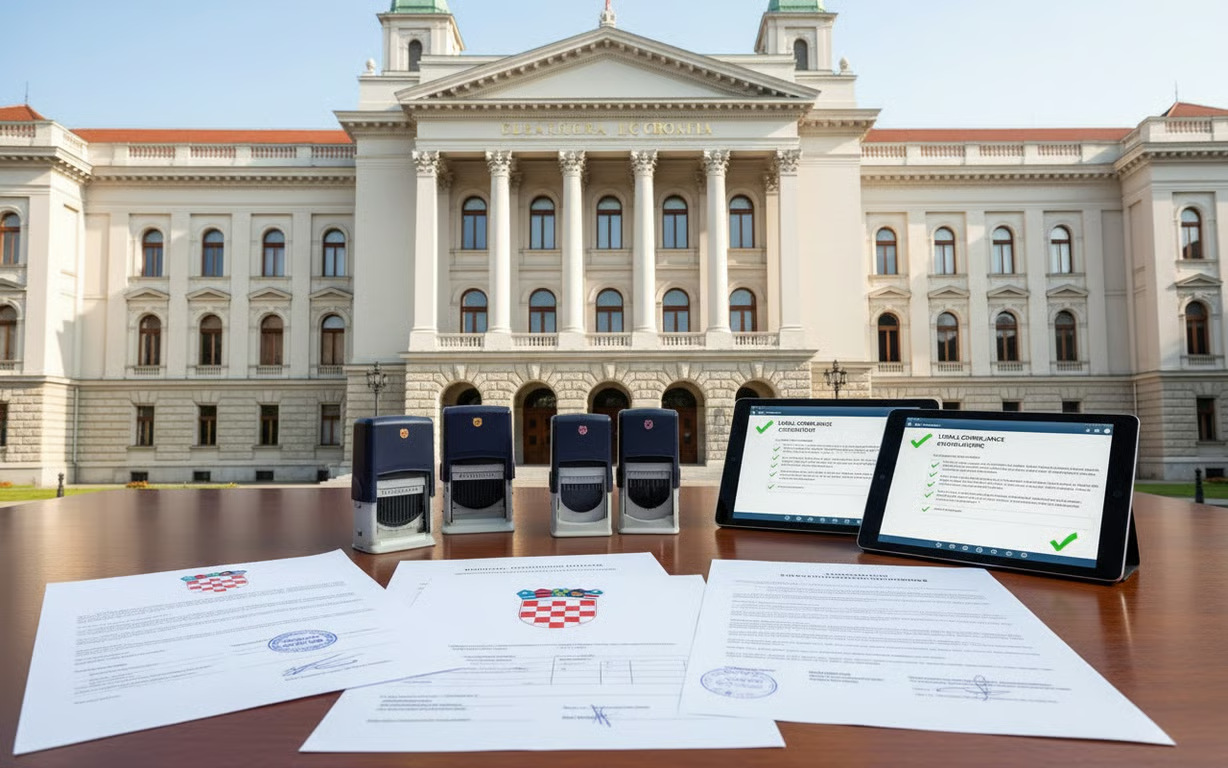 What legal steps are required to establish an eCommerce company in Croatia?
Establishing a legally compliant online business in Croatia requires navigating the country’s regulatory framework. The complexity of Croatian business law requires strategic planning to ensure your venture operates within legal boundaries.
- Choose your business structure (sole proprietorship, limited liability company, or joint stock company)
- Secure your company name through the Croatian Companies Registry (Sudski registar)
- Obtain your tax identification number (OIB) from the Croatian Tax Administration (Porezna uprava)
- Complete VAT registration if required or beneficial for your business model
- Ensure compliance with Consumer Protection Act and Electronic Commerce Act
- Implement GDPR compliance measures for personal data handling
- Consider intellectual property protection through trademark and copyright registration
Your choice of business structure shapes your operational requirements, tax obligations, and liability exposure. The most common options include sole proprietorship (Obrt), which offers simplicity for smaller operations, and limited liability company (d.o.o.), which provides liability protection while maintaining manageable administrative requirements. Joint stock companies (d.d.) suit larger enterprises but involve more complex regulatory compliance.
| Business Structure | Minimum Capital | Liability | Administrative Complexity |
|---|---|---|---|
| Sole Proprietorship (Obrt) | None | Unlimited Personal | Low |
| Limited Liability (d.o.o.) | 2500 EUR | Limited to Investment | Medium |
| Joint Stock (d.d.) | 25000 EUR | Limited to Investment | High |
The registration process involves mandatory steps that must be completed in sequence. First, secure your company name through the Croatian Companies Registry (Sudski registar), ensuring it meets local naming conventions and doesn’t conflict with existing businesses. Next, obtain your tax identification number (OIB) from the Croatian Tax Administration (Porezna uprava), which serves as your primary business identifier for official transactions.
VAT registration becomes mandatory once your business exceeds revenue thresholds, though voluntary registration may provide advantages for certain business models. Understanding VAT implications early prevents compliance issues as your business scales.
Online commerce introduces regulatory layers beyond standard business registration. The Consumer Protection Act and Electronic Commerce Act govern aspects of your operations, including product information accuracy, secure payment processing, and transparent return policies. GDPR compliance is mandatory for businesses handling personal data, requiring privacy policies and data protection measures.
Intellectual property protection deserves attention during your setup phase. Registering trademarks and copyrights protects your brand assets and prevents infringement disputes. Croatian intellectual property law aligns with EU standards, providing protection for registered assets.
Consider engaging local legal counsel specializing in eCommerce law to navigate the regulatory complexity. While this is an upfront investment, professional guidance prevents compliance failures and positions your business for sustainable growth within Croatian legal frameworks.
Once you’ve navigated the legal landscape, the next crucial step is building your eCommerce website and establishing a strong online presence to attract Croatian customers.
Building your eCommerce website and online presence
 How to create a professional eCommerce website that converts visitors into customers
Creating a high-converting online presence requires balancing technical functionality with user experience optimization tailored to Croatian consumer preferences. Your website is your primary sales channel and must deliver performance across devices and connection speeds.
- Platform Selection: Choose between Shopify for user-friendly setup, WooCommerce for WordPress customization, or BigCommerce for enterprise features
- Mobile Optimization: Ensure fast loading times and intuitive navigation across smartphone devices where Croatian consumers shop
- Product Presentation: Use high-quality photography with multiple angles, detailed zoom, and comprehensive descriptions
- Checkout Process: Display all fees transparently and offer guest checkout options to reduce friction
- SEO Implementation: Research Croatian-language keywords and optimize for local search visibility
- Security Features: Display security badges, implement SSL certificates, and ensure payment processing meets standards
- Customer Support: Integrate email, phone, and live chat with Croatian language support capabilities
Platform selection impacts your long-term scalability and operational efficiency. Shopify offers user-friendly setup with app ecosystems, making it ideal for entrepreneurs prioritizing speed to market. WooCommerce provides customization flexibility for WordPress users, while BigCommerce delivers enterprise-level features for businesses planning rapid scaling. Evaluate each platform’s transaction fees, customization capabilities, and integration options against your business requirements.
Mobile optimization is essential in the Croatian market, where smartphone usage drives online shopping. Your website must deliver fast loading times, intuitive navigation, and streamlined checkout processes across mobile devices. Implement responsive design principles that adjust layouts for different screen sizes while maintaining visual appeal and functionality.
Product presentation influences conversion rates and customer trust. High-quality product photography showcasing multiple angles, detailed zoom capabilities, and lifestyle context helps overcome the tactile limitations of online shopping. Comprehensive product descriptions should address customer questions while highlighting key benefits and specifications. Include size guides, material information, and care instructions where applicable.
Your checkout process requires attention since Croatian consumers are sensitive to unexpected costs and complex procedures. Display all fees transparently, including shipping costs, taxes, and additional charges before customers enter payment information. Offer guest checkout options alongside account creation to reduce friction for first-time buyers.
Search engine optimization ensures your website attracts organic traffic from Croatian consumers searching for your products. Research Croatian-language keywords relevant to your offerings and incorporate them naturally into your content. Local SEO tactics, including Google My Business optimization and local directory listings, help establish credibility within the Croatian market.
Security features build trust with Croatian consumers who may be cautious about online transactions. Display security badges prominently, implement SSL certificates, and ensure your payment processing meets security standards. Clear privacy policies and terms of service, available in Croatian, demonstrate professionalism and legal compliance.
Customer support integration should offer communication channels including email, phone, and live chat. Croatian consumers value responsive customer service, and providing support in local language improves customer satisfaction and retention rates.
With your website ready, it’s time to consider how Croatian customers will pay for their purchases and how you’ll handle logistics to ensure smooth delivery.
Payment methods and logistics for Croatian customers
What payment options and shipping solutions work best for Croatian eCommerce customers?
Optimizing your payment and fulfillment operations for Croatian consumers requires understanding their preferences and expectations around transaction security, delivery speed, and cost transparency. Success depends on offering familiar payment methods while delivering reliable logistics experiences.
- Credit Cards: Visa, MasterCard, and Maestro dominate consumer preferences and must be supported
- Mobile Payments: Account for significant transaction volume, indicating consumer comfort with digital technologies
- PayPal: Enjoys recognition and trust among Croatian consumers, essential for credibility building
- Cash on Delivery: Popular for higher-value purchases and first-time transactions with unfamiliar brands
Credit card acceptance is fundamental, with Visa, MasterCard, and Maestro dominating consumer preferences. Mobile payment solutions account for a significant portion of transactions, indicating consumer comfort with digital payment technologies. PayPal enjoys recognition and trust among Croatian consumers, making it essential for businesses seeking to build credibility.
Cash on delivery is popular among Croatian consumers, particularly for higher-value purchases or first-time transactions with unfamiliar brands. While this payment method increases operational complexity, offering it can expand your addressable market by accommodating consumers who prefer to inspect products before payment.
Delivery expectations center on cost transparency, delivery speed, and package security. Croatian consumers are price-sensitive regarding shipping costs, often abandoning purchases when delivery fees seem excessive relative to product value. Display shipping costs clearly during the browsing experience, not just at checkout, to prevent cart abandonment.
Croatia’s infrastructure, including airports and railway networks, facilitates logistics operations. However, the country’s position outside the Schengen Area may extend delivery times for international shipments, requiring clear communication about expected delivery windows.
| Delivery Option | Typical Timeframe | Consumer Preference | Cost Sensitivity |
|---|---|---|---|
| Standard Shipping | 3-7 business days | High | Very High |
| Express Delivery | 1-2 business days | Medium | Medium |
| Same-Day Delivery | Same day | Low | Low |
| Pickup Points | 3-5 business days | High | Very High |
Partnering with local courier services ensures delivery performance and provides customers with tracking systems. Major Croatian logistics providers understand local delivery challenges and can offer competitive rates for domestic shipments. For international businesses, establishing relationships with multiple carriers provides backup options and competitive pricing leverage.
Return and exchange policies influence purchase decisions among Croatian consumers. Offer clear return windows with straightforward processes for initiating returns. Consider providing prepaid return labels for higher-value items to reduce customer friction and demonstrate confidence in your products.
Package tracking capabilities have become standard expectations. Integrate tracking systems that provide real-time updates in Croatian, including SMS notifications for delivery attempts and successful deliveries. This transparency reduces customer service inquiries while building trust through communication.
With payment and logistics sorted, let’s explore effective marketing strategies to reach and convert Croatian consumers.
Marketing strategies for Croatian eCommerce success
 What marketing approaches are most effective for reaching and converting Croatian consumers online?
Developing marketing strategies for the Croatian market requires understanding local consumer behavior, digital platform preferences, and cultural nuances that influence purchasing decisions. For innovative marketing strategies specifically for the Balkan eCommerce sector, your approach must balance international best practices with Croatian-specific tactics that resonate with local audiences.
- Social Media Marketing: Facebook and Instagram reach over 50% of Croatians, offering targeting options for demographics and interests
- Content Marketing: Create product guides and educational content in Croatian to address research-before-purchase behavior
- Email Marketing: Delivers strong ROI when segmented by purchase history and engagement levels
- Search Engine Optimization: Target Croatian-language keywords with commercial intent for local search visibility
- Influencer Partnerships: Collaborate with local micro-influencers for authentic endorsements and community engagement
- Public Relations: Engage with Croatian media outlets and participate in industry events for credibility building
Social media marketing offers reach potential, with over 50% of Croatians engaging on social platforms. Facebook maintains a strong presence for business marketing, providing targeting options for reaching Croatian consumers based on demographics, interests, and behaviors. Instagram is effective for fashion, lifestyle, and consumer electronics—categories that align with Croatian online shopping preferences.
Content marketing should address the Croatian tendency to research before purchasing. Create product guides, comparison articles, and educational content that helps consumers make informed decisions. Publishing content in Croatian improves engagement rates and search engine visibility for local queries.
Email marketing delivers ROI when executed strategically, often outperforming other digital channels for conversion rates. Build your email list through content offers, exclusive discounts, and product launch notifications. Segment your Croatian audience based on purchase history, browsing behavior, and engagement levels to deliver personalized messaging that drives repeat purchases.
Search engine optimization targets Croatian consumers searching for your products or services. Research Croatian-language keywords with commercial intent, focusing on terms that indicate purchase readiness rather than informational queries. Local SEO tactics help establish credibility within the Croatian market, important for building trust with price-sensitive consumers.
Influencer partnerships can accelerate brand awareness and credibility building within Croatian consumer communities. Identify local influencers whose audiences align with your target demographics and whose content style matches your brand values. Micro-influencers often deliver better engagement rates and more authentic endorsements than larger personalities.
Public relations efforts should focus on establishing your brand as a trusted option for Croatian consumers. Engage with local media outlets, participate in industry events, and contribute expert commentary on eCommerce trends. Building relationships with Croatian business journalists can generate coverage that enhances brand credibility.
Performance tracking requires monitoring metrics that align with Croatian consumer behavior patterns. Track not just conversion rates but also research-to-purchase timeframes, since Croatian consumers often require multiple touchpoints before buying. Monitor customer acquisition costs across different channels to optimize your marketing budget allocation for ROI.
Seasonal marketing opportunities align with Croatian cultural events, holidays, and shopping patterns. Plan campaigns around major shopping periods while considering local preferences for gift-giving occasions and seasonal product needs. Understanding Croatian cultural calendar helps time promotions for impact.
Now that you have a marketing strategy in place, let’s look at some practical tips for starting your eCommerce business from scratch in Croatia.
Starting an eCommerce business from scratch – Practical tips
What practical advice can help beginners avoid common pitfalls when starting their first eCommerce venture?
Building an online business requires planning, realistic expectations, and execution tailored to Croatian market conditions. Your approach should balance ambition with constraints while positioning for sustainable growth.
- Validate your product concepts through campaigns and social media engagement before major investments
- Create a business plan addressing Croatian-specific factors including regulations and consumer behavior
- Start with a focused product range to master operations before expanding your catalog
- Implement inventory management strategies that reflect Croatian delivery expectations
- Prioritize customer service excellence as your competitive advantage against larger competitors
- Maintain financial discipline with cash flow management and working capital reserves
- Choose scalable technology infrastructure over custom solutions during startup phase
- Study successful Croatian eCommerce businesses to identify effective strategies and common pitfalls
Market validation should precede investment in inventory or infrastructure. Test your product concepts through campaigns, social media engagement, or pre-order campaigns to gauge Croatian consumer interest. This validation process helps refine your offerings while minimizing financial risk during the startup phase.
Your business plan must address Croatian-specific factors including regulatory compliance, local competition, and consumer behavior patterns. Include financial projections that account for Croatian tax obligations, shipping costs to Croatian addresses, and currency exchange considerations if you’re operating from outside the eurozone.
Starting with a focused product range allows you to master operations, customer service, and marketing before expanding your catalog. Choose products that align with popular Croatian categories while offering differentiation through quality, pricing, or unique features. Avoid spreading resources too thin across product lines during your launch phase.
Inventory management strategies should reflect Croatian consumer expectations for product availability and delivery speed. Consider dropshipping arrangements for initial market testing, then transition to inventory-based fulfillment as sales volumes justify the investment. Maintain safety stock levels that prevent stockouts during peak shopping periods.
Customer service excellence becomes your competitive advantage against larger competitors. Respond promptly to inquiries, resolve issues proactively, and exceed expectations whenever possible. Croatian consumers value personal attention and will reward businesses that demonstrate care for customer satisfaction.
Financial management requires attention to cash flow, particularly during seasonal fluctuations common in eCommerce. Maintain working capital reserves to handle inventory purchases, marketing investments, and operational expenses during slower periods. Track financial metrics including customer acquisition cost, lifetime value, and gross margins by product category.
Technology infrastructure should scale with your business growth while maintaining reliability and security. Start with proven platforms and services rather than building custom solutions that require ongoing technical maintenance. Focus your resources on marketing and customer acquisition rather than technology development during the startup phase.
Learning from successful Croatian eCommerce businesses provides insights into effective strategies and common pitfalls. Study their marketing approaches, product positioning, and customer service practices to identify tactics you can adapt for your own business model.
Now that you have some practical tips, let’s explore the costs involved and funding options available for your Croatian eCommerce venture.
Costs and funding options for your Croatian eCommerce venture
What are the typical startup costs and available funding sources for eCommerce businesses in Croatia?
Understanding the cost structure of launching and operating an online business in Croatia enables financial planning and funding strategies. Your budget must account for startup expenses and operational costs that scale with business growth.
Initial setup costs vary based on your chosen business structure and operational approach. Business registration fees range from minimal amounts for sole proprietorships to several thousand Croatian kuna for corporate structures. Legal consultation fees, while optional, often prove worthwhile given Croatia’s regulatory environment.
Website development represents an upfront investment with implications for your business success. DIY approaches using platforms like Shopify or WooCommerce can minimize initial costs but may require customization expenses as your business grows. Professional development services cost more upfront but often deliver long-term value through optimized performance and scalability.
| Cost Category | Low-End Estimate | High-End Estimate | Ongoing Monthly |
|---|---|---|---|
| Business Registration | 70 EUR | 700 EUR | – |
| Website Development | 300 EUR | 6500 EUR | 70 – 250 EUR |
| Initial Inventory | 0 EUR | 15000 EUR | Variable |
| Marketing Launch | 650 EUR | 3500 EUR | 400 – 2000 EUR |
Marketing expenses require budgeting since customer acquisition costs impact profitability. Digital advertising on Facebook and Google typically requires monthly budgets of 400-700 EUR to generate results. Email marketing platforms, SEO tools, and social media management software add recurring monthly expenses that scale with business growth.
Operational costs include payment processing fees, shipping expenses, customer service tools, and accounting software. Payment processors typically charge a percentage per transaction plus fixed fees, while shipping costs vary based on your fulfillment strategy and delivery speed commitments to customers.
- Personal Savings: Provides control but limits initial scale potential
- Bank Loans: Offer capital amounts with repayment obligations requiring steady cash flow
- Government Grants: EU funding programs support digital business development with favorable terms
- Angel Investors: Focus on Croatian startups with international growth potential
- Revenue-Based Financing: Aligns repayment with business performance but typically costs more over time
Funding options for Croatian eCommerce ventures include traditional and alternative sources suited to different business models and growth stages. Personal savings provide control but limit initial scale, while bank loans offer capital amounts with repayment obligations that require cash flow.
Government grants and EU funding programs support digital business development and international expansion. These programs often provide terms but require applications and compliance with criteria. Research available programs through Croatian development agencies and EU business support networks.
Angel investors and venture capital firms focus on Croatian startups with international growth potential. Prepare business plans and financial projections to attract investor interest, particularly if your business model demonstrates scalability beyond the Croatian market.
Revenue-based financing and merchant cash advances offer funding structures that align repayment with business performance. These options suit businesses with predictable revenue streams but typically cost more than traditional loans over time.
With a solid understanding of costs and funding, let’s explore how to grow and scale your eCommerce business in Croatia once it’s established.
Growing and scaling your eCommerce business in Croatia
How can you expand your eCommerce operations and increase revenue once your business is established?
Scaling your Croatian eCommerce operations requires optimization of your existing processes while expanding into new opportunities that leverage your established market position. Growth should be sustainable and profitable rather than focused solely on revenue increases.
- Analyze data to identify which products, marketing channels, and customer segments generate the highest returns
- Optimize website performance through A/B testing of key pages and conversion processes
- Implement sophisticated inventory management with demand forecasting and seasonal planning
- Diversify marketing channels to reduce dependence on single customer acquisition sources
- Expand geographically into similar Balkan markets like Slovenia, Serbia, and Bosnia
- Automate operational processes while maintaining the personal touch Croatian consumers value
- Build strategic partnerships with established Croatian businesses for accelerated growth
- Implement advanced financial management systems for tracking ROI across growth initiatives
Data analysis drives scaling decisions by revealing which products, marketing channels, and customer segments generate returns. Monitor key performance indicators including customer lifetime value, repeat purchase rates, and profit margins by product category. Use this data to prioritize inventory investments and marketing budget allocation for ROI.
Website optimization becomes important as traffic volumes grow and conversion rate improvements impact revenue. Implement A/B testing for key pages including product listings, checkout processes, and promotional campaigns. Improvements in conversion rates compound as your visitor numbers increase.
Inventory management sophistication must evolve with business growth to prevent stockouts while minimizing carrying costs. Implement demand forecasting systems that account for seasonal patterns, promotional impacts, and new product introduction cycles. Consider expanding into product categories that complement your existing offerings and appeal to your established customer base.
Marketing channel diversification reduces dependence on any single customer acquisition source while potentially lowering acquisition costs. Expand beyond your initial successful channels to include content marketing, affiliate partnerships, and collaborations with complementary businesses serving Croatian consumers.
Geographic expansion within the Balkans region offers growth opportunities given cultural and linguistic similarities. Slovenia, Serbia, and Bosnia and Herzegovina represent accessible markets that may respond well to your proven Croatian strategies with adaptations for local preferences.
Operational automation becomes essential for maintaining service quality while handling increased order volumes. Implement systems for inventory management, customer service responses, and order fulfillment that reduce manual work while maintaining the personal touch that Croatian consumers value.
Team building should focus on roles that support revenue growth and customer satisfaction. Prioritize hiring for customer service, marketing, and operations positions that allow you to focus on strategic planning and business development activities.
Strategic partnerships with established Croatian businesses can accelerate growth while providing local market insights and credibility. Consider collaborations with retailers, logistics providers, or marketing agencies that serve your target customer segments.
Financial management becomes more complex as your business scales, requiring tracking of cash flow, profitability by channel, and return on investment for different growth initiatives. Implement accounting systems and financial controls that provide visibility into business performance and support data-driven decision making.
Help shape the future of eCommerce in Southeast Europe!
If you run or support an online business in Greece, Bulgaria, Romania, Croatia, or Hungary, take part in the Balkan eCommerce Survey – the region’s largest study of digital commerce trends.
Take the survey in your language:
🇬🇷 Greek survey
Frequently Asked Questions
- What are the minimum requirements to start an eCommerce business in Croatia? You need to register a business entity (sole proprietorship requires no minimum capital, d.o.o. requires 2,500 EUR), obtain a tax identification number (OIB), and comply with consumer protection and electronic commerce laws. Budget at least 1000-2000 EUR for basic setup including registration, website, and initial marketing.
- How long does it take to launch an eCommerce business in Croatia? Business registration typically takes 2-4 weeks, while website development ranges from 2-8 weeks depending on complexity. Plan for 2-3 months total from initial planning to launch, including time for legal compliance, payment system integration, and initial inventory setup.
- What payment methods should I offer to Croatian customers? Essential payment methods include Visa, MasterCard, and Maestro credit cards, PayPal, and mobile payment options. Consider offering cash on delivery for higher-value items or new customer acquisition, as this remains popular among Croatian consumers.
- Do I need to have a physical presence in Croatia to start an eCommerce business? No physical presence is required for most eCommerce business models. You can register a Croatian company remotely and operate internationally, though having local representation can simplify legal compliance and customer service operations.
- What are the most effective marketing channels for reaching Croatian consumers? Facebook and Instagram advertising deliver reach and targeting capabilities. Email marketing provides ROI for customer retention. SEO in Croatian captures search traffic. Influencer partnerships can accelerate brand awareness building.
- How much should I budget for marketing when starting out? Allocate 20-30% of projected revenue for marketing during the first year. Effective digital advertising budgets start around 400-700 EUR monthly. Focus spending on proven channels before expanding to experimental marketing tactics.
- What shipping and logistics options work best for Croatian customers? Partner with established Croatian courier services for domestic delivery. Offer delivery speed options with transparent pricing. Consider pickup point delivery to reduce costs. Provide package tracking and delivery notifications in Croatian.
- How do I handle VAT and tax obligations for Croatian eCommerce sales? Register for VAT once you exceed the threshold (around 60000 EUR annually). Collect and remit VAT on Croatian sales. Consult with a Croatian tax advisor to ensure compliance with all obligations and optimize your tax structure legally.
- What are the biggest challenges when starting an eCommerce business in Croatia? Complex regulatory compliance with applicable laws, building trust with price-sensitive consumers, and competing against established international brands. Success requires patience, local market understanding, and execution of customer-focused strategies.
- How can I measure success and track ROI for my Croatian eCommerce business? Monitor customer acquisition cost, lifetime value, conversion rates by traffic source, and profit margins by product category. Track repeat purchase rates and average order values. Use Google Analytics and eCommerce platform analytics to measure marketing channel performance and optimize budget allocation.