

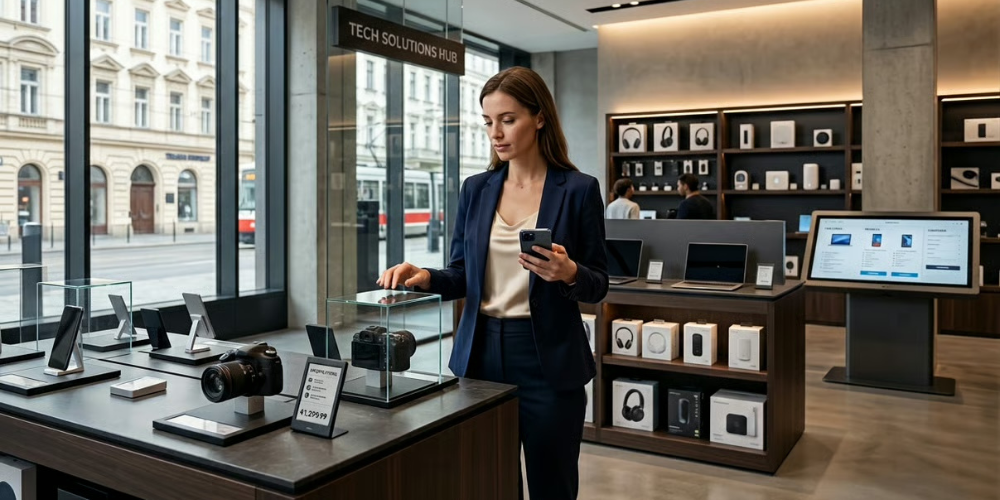
For eCommerce professionals targeting the Central and Eastern European (CEE) market, mastering omnichannel retailisn’t just an advantage – it’s a necessity. CEE’s digitally savvy consumers expect seamless, integrated experiences across all touchpoints. Neglecting this expectation means losing ground to competitors who prioritize unified, customer-centric strategies. This article provides field-tested insights into building and optimizing omnichannel retail operations in the CEE region, focusing on practical strategies that drive measurable ROI.
Omnichannel retail in the CEE region requires integrating online stores, physical locations, mobile apps, and social media into a single, unified customer experience. CEE consumers are price-sensitive, mobile-first, and value physical store reassurance – making channel integration a commercial necessity, not a differentiator. Key strategies include BOPIS, centralized pricing, data-driven personalization, and first-party data collection through loyalty programs. Growth opportunities exist in geographic expansion, underserved categories, and retail media. AI, same-day fulfillment, and unified customer data platforms will define the next phase of omnichannel retail across Poland, Romania, the Czech Republic, Hungary, and the broader Balkans.
Table of Contents
- What is omnichannel retail and why it matters in Central and Eastern Europe
- Understanding omni-channel shoppers in the CEE market
- Omni channel retail strategies that drive success
- Omnichannel growth opportunities in Central and Eastern Europe
- Current omni channel marketing trends shaping the CEE landscape
- Best practices from leading omni channel retailers
- Future of omnichannel retailing in the CEE region
- FAQ
What is omnichannel retail and why it matters in Central and Eastern Europe
What is omnichannel retail?
Omnichannel retail is a business strategy built around delivering a consistent, integrated customer experience across every available touchpoint – online stores, physical locations, mobile apps, social media, and beyond. The critical distinction from traditional multichannel approaches is integration. Multichannel simply means being present on multiple platforms. Omnichannel means those platforms talk to each other, share data, and present a unified brand experience regardless of where the customer shows up.
In Central and Eastern Europe, this distinction is becoming commercially decisive. The CEE region is one of Europe’s fastest-growing eCommerce markets, with digital adoption accelerating sharply across Poland, Romania, the Czech Republic, Hungary, and the broader Balkans. Consumers here aren’t just shopping online more – they’re moving fluidly between channels within a single purchase journey. They might discover a product on Instagram, research it on a desktop browser, check in-store availability on a mobile app, and complete the purchase at a physical location.
Retailers operating in siloed channels simply cannot serve this behavior well. A well-executed omnichannel environment lets you track that entire journey, personalize each interaction, and remove friction at every step. In a region where consumer expectations are rising fast and competition is intensifying, that capability is no longer a differentiator – it’s a baseline requirement for sustainable growth.
- Multichannel vs. omnichannel: Multichannel means presence on multiple platforms; omnichannel means those platforms share data and deliver a unified brand experience.
- CEE market growth: Poland, Romania, the Czech Republic, Hungary, and the Balkans are among Europe’s fastest-growing eCommerce markets, with consumers moving fluidly between channels.
- Cross-channel journeys: CEE shoppers routinely discover on Instagram, research on desktop, check availability on mobile, and purchase in-store – all within a single journey.
- Omnichannel environment: A well-executed omnichannel setup tracks the full journey, personalizes each interaction, and removes friction at every touchpoint.
Now that we’ve defined omnichannel retail, let’s delve into the specific characteristics of CEE shoppers and how they influence your strategy.
Understanding omni-channel shoppers in the CEE market
CEE consumers have distinctive characteristics that directly shape how omnichannel strategies need to be designed for this market. They are highly price-sensitive and comparison-driven. Before committing to a purchase, omni-channel shoppers in this region routinely research across multiple platforms, compare prices on aggregator sites, and hunt for promotional codes or loyalty rewards. Inconsistent pricing across your channels – one of the most common failure points – will actively cost you conversions.
Mobile penetration in CEE is high and growing, but the role of physical stores remains stronger here than in many Western European markets. Shoppers in Poland, Romania, and the Czech Republic still place significant value on the ability to touch, try, and verify products in person, particularly for higher-ticket categories like electronics, furniture, and apparel. This creates a specific opportunity: the research-online, buy-in-store (ROPO) pattern is especially pronounced in CEE, and retailers who bridge that gap effectively capture disproportionate market share.
Trust is also a meaningful factor. CEE consumers tend to be more cautious about new brands and unfamiliar online retailers. A coherent omnichannel presence – where your website, app, and store all feel like the same brand – builds the credibility that converts hesitant browsers into buyers. Personalized offers and recommendations, delivered consistently across channels, accelerate that trust-building process considerably.
- Price sensitivity: Omni-channel shoppers in CEE routinely compare prices across aggregator sites and seek promotional codes or loyalty rewards before purchasing.
- Physical store reliance: Despite high mobile penetration, CEE consumers place stronger value on in-person product verification than Western European counterparts, especially for electronics, furniture, and apparel.
- ROPO behavior: The research-online, buy-in-store pattern is especially pronounced in CEE – retailers who bridge this gap capture disproportionate market share.
- Trust as a conversion factor: A coherent omnichannel presence across website, app, and store builds the credibility needed to convert cautious CEE browsers into buyers.
- Personalization impact: Consistent, personalized offers delivered across channels accelerate trust-building and improve conversion rates.
These behavioral patterns aren’t just academic observations. They directly inform where you invest in omnichannelinfrastructure and which touchpoints deserve the most attention in your CEE go-to-market strategy.
Understanding these nuances is crucial. Next, we’ll explore the omnichannel retail strategies that are proving most effective in capturing and retaining CEE customers.
Omni channel retail strategies that drive success
The retailers gaining ground in CEE right now share a common strategic foundation: they treat channel integration as an operational priority, not a marketing afterthought. Here’s what that looks like in practice.
- Buy online, pick up in-store (BOPIS): One of the highest-impact tactics in the region. It directly addresses the CEE shopper’s desire for both digital convenience and physical reassurance. When implemented well – with real-time inventory visibility and a frictionless pickup experience – BOPIS consistently drives incremental in-store traffic and increases average basket size, because customers who come in to collect an order frequently add items on the spot.
- Consistent pricing and promotions: Nothing erodes customer trust faster than finding a different price on your website versus your store shelf. Leading retailers in CEE have moved to centralized pricing engines that push updates simultaneously across all channels, eliminating this problem entirely.
- Data-driven personalization: By building a unified customer profile that aggregates behavior across channels – what someone browsed online, what they purchased in-store, what emails they opened – you can deliver recommendations and offers that feel genuinely relevant. This approach measurably improves conversion rates and customer lifetime value, and it’s increasingly achievable for mid-market retailers thanks to accessible CRM and CDP platforms.
These strategies lay the groundwork for success. Let’s examine how to build an integrated omnichannel store experience that resonates with CEE consumers.
Building an integrated omnichannel store experience
How to integrate physical stores with digital platforms in CEE
Your physical store is not a liability in an omnichannel world – it’s an asset, provided it’s properly connected to your digital infrastructure. The goal is to make the transition between online and offline completely invisible to the customer. That means real-time inventory synchronization so that what your website shows as available is actually on the shelf. It means staff equipped with tablets or POS systems that can access a customer’s online order history, loyalty points, and saved preferences. And it means in-store experiences – QR codes linking to extended product information, digital kiosks for browsing the full catalog – that extend the digital experience into the physical space.
- Real-time inventory synchronization: What your website shows as available must match what is actually on the shelf.
- Staff access to unified customer data: Equip store associates with tablets or POS systems that surface online order history, loyalty points, and saved preferences.
- In-store digital extensions: QR codes linking to extended product information and digital kiosks for browsing the full catalog bring the digital experience into the physical space.
Retailers who have invested in this kind of integration report measurable improvements in customer satisfaction scores and reduced return rates. Customers arrive at the store better informed and leave with greater confidence in their purchase decisions. That combination of outcomes is hard to achieve through any single-channel approach.
To truly unify the customer journey, technology is key. Next, we’ll explore the essential technologies for creating seamless omnichannel experiences.
Leveraging technology for seamless customer journeys
Core technology components for omnichannel retail in CEE
The technology stack underpinning a successful omnichannel operation in CEE typically includes four core components:
- Unified commerce platform or OMS (Order Management System): Handles inventory and fulfillment across channels.
- CRM or CDP (Customer Data Platform): Consolidates customer data into a single profile.
- Marketing automation platform: Activates customer data across email, SMS, push notifications, and paid media.
- Robust analytics layer: Measures performance at every touchpoint.

You don’t need to build this from scratch. Platforms like Salesforce Commerce Cloud, SAP Commerce, and a growing number of regional solutions are purpose-built for this kind of integration. The key is ensuring your systems share data in real time rather than in batches – because a customer’s journey doesn’t pause while your databases sync overnight. Real-time data infrastructure is what separates retailers who deliver genuinely seamless experiences from those who merely claim to.
With the right strategies and technology in place, significant growth opportunities await. Let’s explore the specific areas where omnichannel retail can unlock new potential in the CEE region.
Omnichannel growth opportunities in Central and Eastern Europe
The CEE region offers a compelling growth environment for omnichannel retail, and several specific opportunities stand out for retailers willing to invest strategically.
- Geographic expansion via omnichannel infrastructure: Because CEE comprises many mid-sized markets – Poland, Romania, Hungary, the Czech Republic, Slovakia, Bulgaria, and others – a retailer with strong omnichannel capabilities can enter new markets more efficiently than one relying on physical store rollouts alone. A digital-first entry, supported by localized fulfillment partnerships and eventually complemented by physical presence in high-traffic locations, is a proven playbook for scaling across the region.
- Underserved categories: While fashion and electronics have seen significant omnichannel investment in CEE, categories like home improvement, sports and outdoor, and health and wellness remain largely fragmented between pure-play online and traditional brick-and-mortar. Retailers who bring genuine omnichannel integration to these categories have a meaningful first-mover advantage.
- Retail media networks: The rise of retail media in CEE creates a new revenue stream for omnichannel retailerswith strong first-party data assets. As brands increasingly seek to reach consumers at the point of purchase – both online and in-store – retailers who can offer targeted, data-driven advertising placements across their channels are positioned to monetize their audience in ways that pure-play eCommerce players cannot match.
The trajectory is clear: omnichannel capabilities are becoming the primary driver of retail growth in CEE, and the window for building a defensible position is open right now.
To capitalize on these opportunities, it’s essential to stay ahead of the latest marketing trends. Let’s examine the current trends shaping the CEE omnichannel landscape.
Current omni channel marketing trends shaping the CEE landscape
Several marketing trends are actively reshaping how retailers engage with customers across channels in Central and Eastern Europe, and staying ahead of them is essential for maintaining competitive relevance.
- Hyper-personalization: Retailers are moving beyond basic segmentation – “women aged 25–34 in Warsaw” – toward individual-level personalization driven by real-time behavioral data. This means dynamically adjusting website content, email offers, and even in-store promotions based on what a specific customer has done across all channels in the past 30 days. Retailers executing this well are seeing significant lifts in email open rates, click-through rates, and conversion.
- Mobile-first marketing: Smartphone penetration exceeds 80% in most CEE markets, and mobile accounts for the majority of online browsing time. Retailers are responding by investing in progressive web apps (PWAs), mobile-optimized checkout flows, and mobile payment integrations – including local solutions like BLIK in Poland, which has become a dominant payment method and a central part of the mobile shopping experience.
- Social commerce: Platforms like TikTok and Instagram are increasingly functioning as discovery and purchase channels, not just awareness tools. Forward-thinking retailers are integrating their product catalogs directly with these platforms and using shoppable content to shorten the path from inspiration to purchase.
- Unified customer data platforms: As third-party cookies phase out and privacy regulations tighten across Europe, first-party data – collected through loyalty programs, account registrations, and direct customer interactions – is becoming the most valuable marketing asset a retailer can own. Building the systems to collect, unify, and activate that data across channels is a strategic imperative for the next phase of omnichannel marketing in CEE.
To put these trends into practice, let’s examine the best practices employed by leading omnichannel retailers in the CEE region.
Best practices from leading omni channel retailers
The retailers setting the standard for omnichannel execution in CEE share several practices worth emulating.
- Start with the customer journey, not the technology: Before selecting platforms or building integrations, they map exactly how their customers move between channels and identify the specific friction points that cost them conversions. This journey-first approach ensures that technology investments solve real problems rather than creating impressive-looking infrastructure that doesn’t move the needle.
- Treat loyalty programs as omnichannel connectors: A well-designed loyalty program gives customers a reason to identify themselves across every channel – online, in-app, and in-store – which in turn gives the retailer the data needed to build unified profiles and deliver personalized experiences. The best implementations in CEE make loyalty points visible and redeemable everywhere, reinforcing the sense that the brand is one coherent entity regardless of where the interaction happens.
- Measure omnichannel performance with full-journey metrics: Leading retailers measure with metrics that reflect the full customer journey – not just channel-specific KPIs. Cross-channel conversion rates, customer lifetime value by acquisition channel, and BOPIS attachment rates are the kinds of metrics that reveal whether your omnichannel strategy is actually working, rather than whether individual channels are simply hitting their isolated targets.
As we look ahead, the future of omnichannel retailing in CEE promises even greater integration and personalization. Let’s explore what the future holds for this dynamic market.
Future of omnichannel retailing in the CEE region
The trajectory for omnichannel retail in CEE points toward deeper integration, greater personalization, and more sophisticated use of first-party data. Artificial intelligence will play an expanding role – in demand forecasting, dynamic pricing, personalized content generation, and real-time customer service across channels. Retail media networks will mature, giving omnichannel retailersnew ways to monetize their audience data. As the region’s logistics infrastructure continues to improve, same-day and next-day fulfillment will shift from premium offerings to standard consumer expectations. The retailers who invest in their omnichannel foundations today are building the capabilities that will define competitive advantage in CEE for the next decade.
- AI-driven operations: Demand forecasting, dynamic pricing, personalized content generation, and real-time customer service across channels.
- Retail media maturity: Omnichannel retailers with strong first-party data will unlock new audience monetization revenue streams.
- Fulfillment as a baseline: Same-day and next-day delivery will shift from premium offerings to standard consumer expectations as regional logistics infrastructure improves.
- First-party data as the primary competitive asset: Retailers building unified data capabilities now will hold a structural advantage over those who wait.
In summary, the future of omnichannel retailing in the CEE region hinges on deeper integration, enhanced personalization, and the strategic utilization of first-party data. By prioritizing these elements, retailers can establish a robust foundation for sustained success and gain a competitive edge in this dynamic market. Now, let’s address some frequently asked questions about omnichannel retail in the CEE region.
FAQ: Omnichannel Retail in the CEE Region
- What is the biggest difference between multichannel and omnichannel retail? Multichannel means being present on multiple platforms. Omnichannel means those platforms are integrated – sharing data, inventory, and customer profiles – so the experience is seamless regardless of where the customer engages.
- Which CEE markets offer the strongest omnichannel growth potential? Poland and the Czech Republic are the most mature, but Romania, Hungary, and the Balkans are growing fastest. Romania in particular has seen rapid eCommerce expansion and represents a significant opportunity for retailers who move early with integrated strategies.
- What KPIs should I track to measure omnichannel performance? Focus on cross-channel conversion rates, customer lifetime value segmented by acquisition channel, BOPIS attachment rates, return rates by channel, and unified customer profile coverage – the percentage of customers you can identify across all channels.
- How important is BOPIS for CEE retailers specifically? Very important. CEE consumers value both digital convenience and physical reassurance, making BOPIS a natural fit. Retailers who implement it well consistently see increased in-store traffic and higher average order values from pickup customers.
- What technology do I need to get started with omnichannel retail? At minimum: a unified order management system, a CRM or customer data platform, and a marketing automation tool. Real-time data synchronization between these systems matters more than the specific platforms you choose.
- How do I handle pricing consistency across channels? Implement a centralized pricing engine that pushes updates simultaneously to all channels. This eliminates discrepancies and builds customer trust. Promotional pricing should follow the same logic – one source of truth, distributed everywhere.
- How does mobile commerce fit into a CEE omnichannel strategy? It’s central. Smartphone penetration exceeds 80% in most CEE markets. Prioritize mobile-optimized checkout, local payment integrations like BLIK in Poland, and progressive web apps that deliver app-like experiences without requiring a download.
- What role does loyalty play in omnichannel strategy? Loyalty programs are one of the most effective tools for connecting customer behavior across channels. When customers identify themselves through a loyalty account at every touchpoint, you gain the data needed to personalize experiences and measure true omnichannel performance.
- How should I approach entering a new CEE market with an omnichannel model? Start digital-first with localized content, pricing, and payment options. Build fulfillment partnerships for fast delivery. Use performance data to identify high-potential locations before committing to physical store investment. This approach reduces risk and accelerates learning.
- What will omnichannel retail in CEE look like in five years? Expect AI-driven personalization at scale, mature retail media networks, same-day fulfillment as a baseline expectation, and first-party data as the primary competitive asset. Retailers building those capabilities now will have a significant structural advantage over those who wait.
References
- DataReportal – Digital 2024: Global Overview. Smartphone penetration exceeds 80% in most CEE markets; mobile accounts for majority of online browsing time.
- Eurostat – Digital Economy and Society Statistics 2024. Hyper-personalization trends; real-time behavioral data usage across EU eCommerce.
- eCommerce Europe – European eCommerce Reports. CEE region growth trends, platform strategies, and omnichannel customer engagement data.