

Search no longer begins, or ends, with Google. Customers now look for answers inside AI platforms, discover brands through social feeds, and rely on recommendations that can shape decisions without a single website visit. For eCommerce, that changes the rules of visibility and raises a real question: is classic, Google-first SEO still enough in a zero-click world?
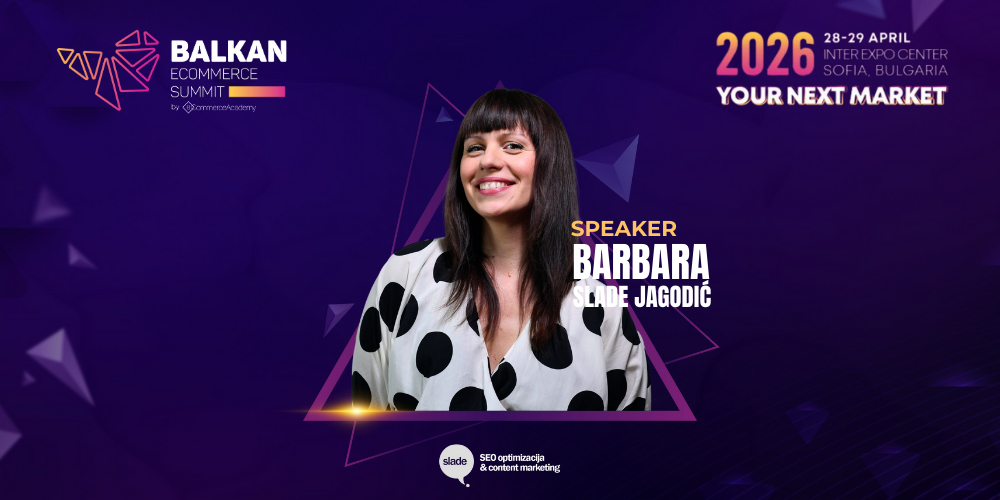
Barbara Slade Jagodić is the founder of SLADE and a speaker at Balkan eCommerce Summit 2026, where she will present “How to Get Visible Beyond Google: Search Everywhere Optimization for Google and ChatGPT” – a session focused on how eCommerce visibility is evolving beyond a Google-first approach.
In this interview, Barbara Slade Jagodić shares a practical framework for Search Everywhere Optimization and explains why the “E” in SEO increasingly stands for Everywhere. She outlines clear, actionable ways for eCommerce brands in the region to strengthen their presence across search engines, social platforms, and AI-driven ecosystems.
You specialize in “Search Everywhere Optimization.” What are the key differences between optimizing for Google and optimizing for AI-driven platforms such as ChatGPT?
 The SEO industry is going through one of its biggest shifts since the introduction of mobile-first indexing. BUT (there’s always a but) instead of a clear consensus, the industry is deeply divided. SEO experts do not agree on a simple question: is there still only SEO or has AI-driven optimization become a separate discipline altogether? In other words, is SEO the same as GEO (or AEO/AIO, depending on how people call optimisation for chatbots).
One side argues that nothing fundamentally new is happening. Optimizing for AI-powered search engines is simply an extension of SEO as we know it: The same principles are applied to new interfaces. The other side sees a structural break: Optimization for platforms like ChatGPT, Gemini, or Perplexity follows a different logic altogether.
This disagreement in fact reflects a much deeper shift in how search works.
We’re heading toward zero-click marketing world where users receive answers without clicks and without websites. AI platforms do not rank pages, but they give answers from different sources. You have to optimize for search EVERYWHERE, because AI platforms are indexing your overall digital image. And users tend to search for your services and products not only on AI chatbots, but also on social media.
SEO has changed because people have changed their online behaviour. The „E“ in SEO doesn’t stand for „engine“ any more, it stands for „everywhere“.
When you started searching for Balkan eCommerce Summit, what did you find? What recommendation will you give to the team for better results?
I was able to find you instantly.
However, I would not stop at branded search visibility. I would recommend optimizing for broader, high-intent queries such as “ecommerce conference Europe”, while building brand recognition through a strong social media presence and targeted advertising.
Many companies still rely heavily on traditional SEO. What are the biggest visibility opportunities they miss when they don’t think beyond Google?
Users form opinions and make decisions before they ever reach Google. And sometimes without visiting your website at all. AI platforms, social media, communities and marketplaces shape perception and build brands.
Google ranks pages. AI platforms shape brand perception and recommend sources. Companies that focus only on old-school, website-centric SEO miss visibility in AI-generated answers and recommendations. Today, visibility requires presence across the entire digital ecosystem. If a brand is absent from AI platforms, social media,and authoritative media, it may never enter the consideration set, no matter how well it ranks in Google.
As one of Croatia’s top LinkedIn business influencers, what role does personal and company branding on social platforms play in driving organic growth for eCommerce businesses?
 Platforms like TikTok, Instagram, YouTube and LinkedIn are primarily discovery channels. Users search there for everything related to a business, but most often for product reviews, comparisons, use cases, and real-life experiences. Long before they type anything into Google, they already know which brands they trust.
This is where branding directly influences classic SEO performance. People that see you on social media perform a lot more branded searches, but even when they don’t do that, familiar names attract higher CTRs in search results because they feel “safer”/more credible.
So, strong personal and company branding mean a lot for organic growth. It increases branded search demand, improves CTR and conversion rates.
For the companies attending the Balkan eCommerce Summit, what is the most practical step they can take this month to increase visibility across search, social, and AI ecosystems?
First, invest in PR to boost brand visibility that results in real brand mentions and reviews.
Second, do a technical SEO check and content updates. Technical SEO ensures you are crawlable. Updated content ensures relevance (and AI platforms like ChatGPT love fresh content!).
Search Everywhere Optimization sounds powerful but complex. Where should a small or mid-sized online store start if they want quick, realistic results?
On social media. Let influencers and ads work for you in building your brand. Advertise. A lot. When people start recognizing a brand, everything else becomes easier.
If you want to hear her talk live and take away practical tactics to boost visibility not only on Google but also across AI platforms, this is a session you shouldn’t miss. Secure your seat at http://balkanecommerce.com.