


Angel Angelov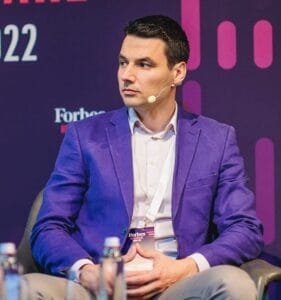 is a leading investor and managing partner at Innovation Capital, with extensive experience in corporate finance and supporting startups. With over 200 early-stage investments, he plays a key role in fostering innovation in the region, with part of his portfolio including companies in the eCommerce sector.
As an active mentor and consultant, Angel helps entrepreneurs avoid the most common mistakes and build sustainable business models. He believes that success in eCommerce lies not only in innovation but also in the right timing for market entry and the strategic management of resources.
In this interview, he shares which business models attract the most investor interest, how startups can prepare for the new investment cycle in 2025, and what the key principles are for long-term and profitable partnerships between entrepreneurs and investors.
You are a recognized expert in corporate finance and specialize in advising startups. For our readers, it would be very interesting to learn about the most significant trend you observe in eCommerce investments.
The types of eCommerce companies that are worth investment from a venture capital fund are not many.
In general, there are three successful models:
- Traditional online stores, which are market leaders in one or more categories but have limited scalability.
- Marketplaces, which are highly scalable but also require significant marketing expenses.
- Tech companies that support eCommerce (e-comm tech), which make merchants’ work easier or increase store capacity.
An investor can generate returns from all three models, but under different conditions – equity percentage, time to exit, plans for the next funding round, etc.
Currently, the greatest investor interest is in marketplaces, while there is a decline in e-comm tech due to the rise of artificial intelligence and constrained budgets, following the cooling of the software industry over the last 12 months.
What are the most common lessons entrepreneurs learn too late, and how can they be avoided? From your experience as a mentor and investor, can you share an example of a company that significantly improved its results after your advice?
A classic mistake entrepreneurs make is thinking too early that they have achieved product-market fit – this often leads to wasting budgets, seeking more investment, and losing focus.
Entrepreneurs love to “conquer new markets” and develop new products or features without having even one core product that their customers can’t live without. Additionally, startups often start operating like corporations without having enough runway – meaning they lack the budget and a positive unit economics model. This results in hiring more people than their financial performance allows, which increases fixed costs without sufficient revenue growth.
For example, I’ll mention a fairly large outsourcing software company that wanted to transition into a product-based company. They always approached the process from the product side rather than from the market need.
The CEO called me dozens of times, saying something like:
“Angel, we developed an amazing software product – how do we sell it?”
And almost every time, my response was:
“The market must demand a product that doesn’t yet exist, and your job is to create it – then it will sell itself.”
After several failed projects and a near bankruptcy, this founder finally understood my advice and still doesn’t hold a grudge against me for being brutally honest about his ideas.
How can eCommerce companies prepare for and take advantage of the new investment cycle starting in 2025? What are the key steps and strategies you would recommend for successfully attracting investors and accelerating growth?
The expectation is that there will be more institutional money in the market for Bulgarian companies, primarily startups, but not before Q3 2025. Aside from one or two new fund managers, most names will be familiar, so companies should start conversations with investors early.
It’s crucial to present a well-structured narrative that highlights achievements over the past months or since the last meeting with a specific fund. Key metrics include revenue, number of customers, access to and experience with distribution channels, team track record, and the unique competitive advantage.
What are the key elements of a successful partnership between eCommerce startups and investors? How can companies build long-term and profitable relationships with their financial partners?
These principles are universal across all industries. Communication and integrity within the investment community are extremely important, as fund managers constantly exchange information. Just because a fund has declined your pitch doesn’t mean you should stop sharing updates, talking to them, or seeking advice.
Post-investment interaction is also crucial – active founders should engage fund managers for assistance with legal and accounting matters, customer and partner connections, and introductions to other investors. You should carefully choose an investor you’re comfortable working with because this is a long-term partnership.
How can eCommerce businesses apply the principles of “Lean Startup” to build a faster and more sustainable business?
In the era of artificial intelligence and no-code technologies, this is more essential than ever. Of course, effort is required to learn and master a given technology, but the absence of automation tools, digital marketing strategies, distribution channel analysis, optimal payment platforms, and logistics integration can doom a project to failure.
For me, the most important rule of the “Lean Startup” methodology is to quickly go through the trial-and-error process, analyzing results rationally and without emotions. Every mistake in the early stages can cost the budget for two to three employees or even put the company in financial distress.
You’ve previously mentioned how crucial the business planning stage is for every new venture. In your opinion, what are the most common mistakes businesses make, and what practical steps can they take to avoid them?
As a general recommendation, I would suggest applying the “50% Rule” – after spending weeks or months on calculations, take whatever Excel predicts as expected revenue and divide it by two. My experience shows that no more than 5 out of 100 startups reach their revenue forecasts for the following year, with deviations often being shocking. This happens because entrepreneurs are naturally dreamers, which is also one of their greatest qualities.
Another common mistake stems from inexperience in setting assumptions that shape financial expectations for the business model. If an entrepreneur has never managed a similar business, they should seek insights from someone with experience – whether a mentor, friend, investor, partner, or even a competitor. A friend once amazed me by revealing that he attended over 20 job interviews in the past year, not because he needed a new job, but to gather valuable market insights and learn the intricacies of different business models.
What is your experience with events like the Balkan eCommerce Summit 2025, which bring together entrepreneurs, investors, and industry leaders? What are the key elements that make such an event successful for investors? And why should business owners attend?
I can confidently say that I am a professional networker with over 10 years of experience actively attending conferences, mainly abroad. I have developed a routine that allows me to cover a lot of ground and maximize the time and money invested in a given event.
Key strategies include using a CRM, keeping notes on conversations, adopting an active but non-aggressive approach to follow-ups, effectively filtering contacts via event apps or social media, limiting initial meetings with new contacts to 15 minutes, and many other small but impactful tactics.
Successful networking requires serious preparation – analyzing attendees, pre-planning meetings, and optimizing downtime, even during lunch or drinks after the event. I don’t see much value in listening to every speaker; instead, focus on topics that truly interest you and ask yourself if the same information shared on stage can be found online. If the answer is “yes,” then go find your partners, investors, and clients in the hallways, restrooms, coffee stations, bars, side events, or even while waiting in line.
Angel Angelov’s strategic approach to entrepreneurship and deep understanding of market dynamics highlight the importance of adaptability and informed decision-making in today’s digital landscape. His insights into business planning, networking, and lean methodologies offer valuable lessons for both emerging and seasoned entrepreneurs.
📅 Don’t miss the chance to learn from experts like Angel Angelov at the Balkan eCommerce Summit 2025. Secure your ticket today and gain the knowledge and connections to elevate your business. Visit balkanecommerce.com for more details!