

When an online shopper in Romania, Bulgaria, or Greece completes a checkout, the last-mile experience often determines whether they return or never order again. Speed matters, flexibility matters, but what truly separates market leaders from the rest is the ability to deliver seamless logistics across borders, payment methods, and customer expectations.
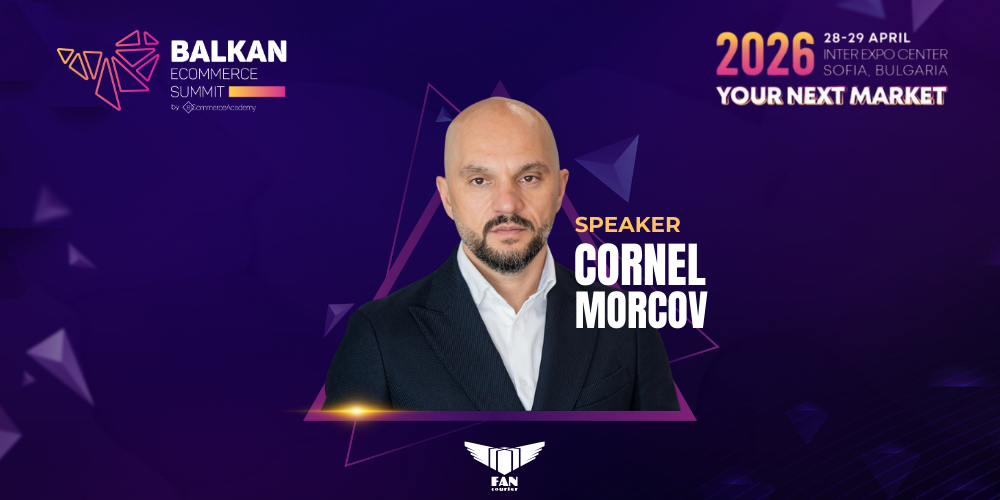
Cornel Morcov, Chief Commercial Officer at FAN Courier, has spent years building exactly that. As one of Romania’s leading logistics providers, FAN Courier handles millions of deliveries annually and plays a critical role in enabling eCommerce growth across Southeast Europe. From developing international service networks to leading commercial strategy and partnerships in markets like Bulgaria, Cornel understands what it takes to turn logistics from a cost center into a competitive advantage.
In this interview, he breaks down the most common mistakes eCommerce brands make when scaling cross-border, why last-mile delivery defines customer loyalty, and how merchants should think about logistics partnerships in a region where consumer expectations, payment habits, and infrastructure vary dramatically from country to country.
As a speaker at the Balkan eCommerce Summit, Cornel shares the strategic insight that growing brands need to hear: logistics is not just about moving boxes – it’s about moving faster, smarter, and more flexibly than the competition.
FAN Courier is a market leader in Romania. From your perspective, what are the biggest logistics challenges eCommerce businesses face today when scaling beyond their home market?
One of the biggest challenges is that many eCommerce businesses expand internationally without properly researching the specific markets they are targeting.

Each market is different, and consumer behavior, delivery expectations, payment preferences, and return habits vary significantly from country to country. Sellers often assume that what works in their home market will work elsewhere, which can lead to poor customer experience and higher operational costs.
Successful cross-border scaling requires a deep understanding of local consumption habits, service expectations, and regulatory requirements, as well as close collaboration with logistics partners who understand those local realities.
You were directly involved in developing FAN Courier’s international services. What are the most common mistakes eCommerce brands make when expanding cross-border, especially in Southeast Europe?
A common mistake is underestimating the complexity of cross-border logistics in Southeast Europe.
Many sellers fail to adapt their delivery models to:
- Local infrastructure
- Cash-on-delivery preferences
- Return processes, which are still very relevant in this region

Another frequent issue is choosing logistics partners based solely on price rather than reliability, network coverage, and customer support.
Brands also tend to overlook customs procedures, documentation, and local compliance, which can lead to delays and dissatisfied customers.
In this region, having a strong regional partner with local expertise makes a significant difference.
Last-mile delivery often defines the customer experience. What separates a logistics partner that supports growth from one that quietly limits it?
A growth-supporting logistics partner is defined by flexibility and openness to alternative delivery solutions.
This includes offering multiple delivery options, such as:
- Lockers
- Pickup points
- Scheduled deliveries
- Easy returns
A partner that limits growth is often rigid, offering only standard delivery services without adapting to changing consumer expectations.
Flexibility, data transparency, proactive communication, and the ability to customize last-mile solutions are essential for supporting scalable eCommerce growth.
You oversee both commercial strategy and international partnerships, including Bulgaria. How different are the expectations of merchants and consumers across Balkan markets, and how should brands adapt?
While Balkan markets share some similarities, expectations differ notably from country to country.
For example, delivery speed, payment methods, and trust in online shopping vary between Romania, Bulgaria, Greece, and other regional markets.

Consumers in some countries prioritize price and cash-on-delivery, while others increasingly value speed, convenience, and flexible delivery options.
Sellers must adapt by localizing their logistics strategy, offering the right payment options, delivery methods, and customer communication tailored to each market.
A one-size-fits-all approach simply does not work in this region.
As a speaker at the Balkan eCommerce Summit, what key insight do you want merchants and eCommerce leaders to leave with when it comes to logistics as a competitive advantage?
Logistics should be seen as a strategic differentiator, not just a cost center.
The real competitive advantage comes from the ability to offer customers complete, end-to-end logistics services across the entire supply chain – from transportation and warehousing to customs clearance and delivery options.
When merchants work with partners who can integrate all these services seamlessly, they gain speed, control, and scalability, ultimately delivering better customer experience and supporting sustainable international growth.
Meet Cornel at Balkan eCommerce Summit 2026
If you are scaling cross-border and want to turn logistics into a competitive advantage instead of a constraint, connect with Cornel on-site. These conversations often lead to better partnerships and faster execution.
🎟️ Grab your ticket at balkanecommerce.com and be part of building stronger connections across the Balkans.