

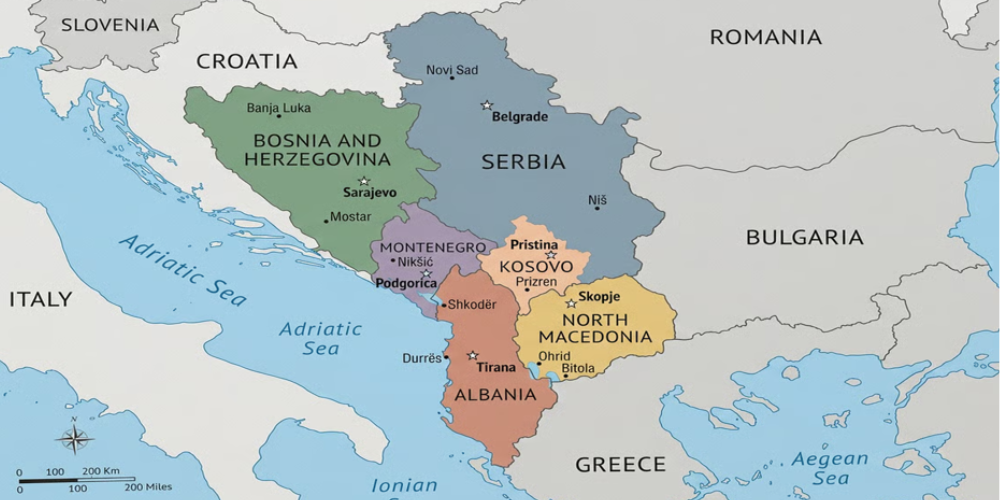
Non-EU Balkan customs workflows require country-specific documentation, HS code accuracy, CIF-based duty assessment, and VAT on the duty-paid value. Mastering electronic declarations, broker partnerships, and compliance routines reduces clearance times, avoids delays, and enables scalable, multi-market eCommerce operations across Serbia, Bosnia and Herzegovina, North Macedonia, Albania, Montenegro, and Kosovo.
Table of Contents
- Understanding Non-EU Balkan Customs Workflows for eCommerce Operations
- Customs Clearance Process Fundamentals for Balkan Cross-Border Trade
- Customs Duty Calculation Methods and Tariff Structures
- Customs Broker Services and Third-Party Logistics Partnerships
- De Minimis Thresholds and Duty-Free Allowances
- Trade Agreements and Preferential Tariff Programs
- Common Customs Challenges and Compliance Pitfalls
- Technology Solutions for Streamlined Customs Workflows
- Best Practices for Non-EU Balkan eCommerce Customs Management
- Frequently Asked Questions
Understanding Non-EU Balkan Customs Workflows for eCommerce Operations
If you’re scaling your eCommerce business into the Balkans, or looking to enter new markets in CEE and the Balkans, you’re entering one of Europe’s most commercially promising yet procedurally complex regions. The non-EU Balkan countries – Serbia, Bosnia and Herzegovina, North Macedonia, Albania, Montenegro, and Kosovo – each maintain independent customs regimes that operate entirely outside the EU’s harmonized trade framework. That distinction matters enormously in practice, revealing some of the hidden barriers of selling beyond the EU. Where goods move freely across EU internal borders, every shipment entering a non-EU Balkan market triggers a mandatory customs process with its own documentation requirements, duty structures, and clearance protocols.
The fundamental difference between EU and non-EU Balkan customs procedures comes down to sovereignty. Each of these six countries controls its own tariff schedules, sets its own VAT rates, and enforces its own compliance standards. There is no single rulebook. A shipment that clears Serbian customs without issue may face entirely different requirements when crossing into Bosnia and Herzegovina or North Macedonia. For eCommerce operators accustomed to the relative simplicity of intra-EU logistics, this fragmentation represents a genuine operational challenge – but also a competitive moat for those who master it, unlocking the significant benefits of cross-border eCommerce.
In practical terms, every cross-border shipment into these markets requires a commercial invoice with specific data fields, a customs declaration that meets national format requirements, and – depending on the product category and claimed duty treatment – certificates of origin and product-specific compliance documentation. Customs authorities assess duties on the CIF value, meaning the calculation base includes not just the product price but also international shipping charges and insurance premiums. VAT is collected separately at the point of clearance, with rates ranging from 17% to 21% across the region depending on the country and product category.
Clearance timelines reflect documentation quality more than any other variable. Accurate, complete paperwork typically moves through customs in one to three business days. Errors, missing certificates, or value declaration mismatches trigger manual review processes that can extend that timeline to five to seven days – long enough to damage delivery promises and generate customer service escalations that erode the trust you’ve worked to build.
The strategic question for most eCommerce operators isn’t whether to engage with these customs workflows, but how, aligning with effective global eCommerce strategies. You can build internal expertise and direct carrier relationships, or you can partner with logistics providers who already maintain established customs brokerage networks across the region. For most operators entering multiple Balkan markets simultaneously, the partnership route accelerates market entry and reduces compliance risk considerably. Either way, understanding the mechanics of these workflows before you launch is what separates operators who scale smoothly from those who spend their first six months firefighting clearance problems.
The sections that follow break down every layer of this process – from documentation requirements and duty calculation methods to technology platforms and broker selection criteria – giving you a field-tested framework for building customs operations that actually work at scale. Whether you’re shipping your first hundred orders into Serbia or optimizing an established multi-country operation across all six markets, the principles here apply directly to your situation.
Key takeaways for understanding non-EU Balkan customs
- Non-EU Balkan countries: Serbia, Bosnia and Herzegovina, North Macedonia, Albania, Montenegro, and Kosovo operate outside the EU’s harmonized trade framework.
- Sovereign procedures: Each market sets its own tariff schedules, VAT rates, and compliance standards — there is no single rulebook.
- Mandatory documentation: Commercial invoice, customs declaration, and product/category-specific certificates are required.
- CIF-based duties: Duties are assessed on product cost plus international shipping and insurance.
- VAT at clearance: VAT is collected separately at customs, with standard rates ranging from 17% to 21% across the region.
- Speed driver: Accurate, complete paperwork is the primary determinant of clearance timelines.
Customs Clearance Process Fundamentals for Balkan Cross-Border Trade
The customs clearance process across non-EU Balkan markets follows a structured sequence of verification checkpoints, and understanding that sequence is the first step toward building predictable delivery operations. Every shipment entering Serbia, Bosnia and Herzegovina, North Macedonia, Albania, Montenegro, or Kosovo moves through the same basic workflow: documentation submission, declaration validation, duty assessment, payment processing, and final release authorization. The speed at which your shipments move through these stages depends almost entirely on how well your documentation holds up at each checkpoint.
Step-by-step customs clearance sequence
- documentation submission
- declaration validation
- duty assessment
- payment processing
- final release authorization

The process begins with import documentation submission. Commercial invoices must contain specific data fields that customs authorities use for both duty assessment and compliance verification. That means detailed product descriptions, accurate HS code classifications for each item, declared unit values and total shipment value, country of origin, and complete sender and recipient information. Vague descriptions like “clothing” or “electronics” are a reliable way to trigger manual review. Precise descriptions like “women’s cotton t-shirt, short sleeve, crew neck, size M” move through automated processing pathways far more efficiently.
Customs declarations follow country-specific formats, and declaration accuracy is what determines processing speed more than shipment value or product category. Errors in HS code classification, mismatches between invoice values and payment records, or missing required certificates all trigger manual review processes that extend clearance timelines from hours to days. During that time, your goods sit in a customs warehouse accumulating storage fees while your customer watches their delivery date slip.
Physical inspection rates vary by country, product category, and your compliance history as a shipper. High-risk categories face elevated inspection rates across the board. Established shippers with clean compliance records often benefit from expedited processing through trusted trader programs, which is one of the longer-term operational advantages of building a consistent, accurate documentation track record. Inspection protocols verify that physical goods match declared descriptions, check authenticity of branded products, and confirm compliance with safety standards and import restrictions.
Duty assessment follows declaration validation. Customs authorities calculate duties on the CIF value using country-specific tariff schedules, then assess VAT separately on the duty-paid value. Payment processing adds another checkpoint before release authorization – most markets require immediate settlement through approved payment channels before goods can exit customs control. The entire sequence typically takes one to three business days for straightforward shipments with accurate documentation, but can stretch to five to seven days when complications arise.
The operators who consistently achieve faster clearance aren’t necessarily the ones with the most sophisticated logistics networks. They’re the ones who build pre-clearance data validation into their order management systems, catching documentation gaps and classification errors before shipments reach the border rather than scrambling to fix them after the fact. That proactive discipline is the single most impactful operational investment you can make in Balkan cross-border eCommerce. It’s also the discipline that compounds most powerfully as your shipment volumes grow – the efficiency gains from preventing a single clearance hold multiply across hundreds of daily shipments.
Key takeaways for clearance fundamentals
- Documentation detail: Specific product descriptions and accurate HS codes drive automated processing.
- Declaration accuracy: Mismatches or missing certificates trigger manual review and storage fees.
- Inspection variability: Rates depend on product risk and shipper compliance history.
- CIF then VAT: Duties first on CIF; VAT on the duty-paid value.
- Immediate payment: Approved channel settlement is required before release authorization.
- Pre-clearance validation: Catching errors upstream is the most impactful time-saver.
Required Documentation and Compliance Standards
Documentation is where most customs problems originate, and where most of them can be prevented. The commercial invoice is the primary document for all cross-border shipments into non-EU Balkan markets, and it needs to contain more than the basics. Customs authorities require detailed product descriptions that match physical goods, accurate HS code classifications for each line item, declared unit values and total shipment value, country of origin for each product, and complete sender and recipient information with valid contact details. If any of these fields are missing, inaccurate, or inconsistent with other documentation, you’re looking at a manual review hold.
Certificates of origin become mandatory when you’re claiming preferential duty rates under bilateral or multilateral trade agreements. Serbia, North Macedonia, Albania, and Montenegro all maintain trade agreements that can reduce or eliminate duties on qualifying goods, but customs authorities require proper certification before applying those rates. The certificate format and issuing authority requirements vary by country and agreement type, which means pre-clearance verification is essential for any shipment claiming preferential treatment. Attempting to obtain certification retroactively after a shipment reaches customs control rarely succeeds – build certificate procurement into your pre-shipment workflow as a non-negotiable step.
Product-specific certifications apply to regulated categories, and this is where operators managing diverse catalogs need to be particularly careful. Electronics require CE marking documentation. Cosmetics need safety assessments and ingredient declarations. Food supplements require health ministry approvals in most markets. Children’s products demand safety compliance certificates. Medical devices require registration documentation. Missing any of these certifications prevents customs release regardless of how accurate your other documentation is – goods can sit in a customs warehouse for days while you scramble to obtain the right paperwork retroactively.
Compliance standards also extend to value declaration accuracy. Customs authorities across the region increasingly cross-reference declared values against payment processor data, marketplace transaction records, and historical pricing patterns to identify undervaluation. Discrepancies between your invoice amounts and actual payment records trigger investigations that delay clearance and can result in penalties. The practical implication is straightforward: your invoice values must match your payment records precisely, including any discounts, promotional adjustments, or currency conversion calculations that might otherwise create apparent mismatches. Document every legitimate pricing adjustment with supporting evidence that customs officers can verify independently.
Key documentation and compliance checklist
- Commercial invoice fields: Detailed descriptions, HS codes, unit values and totals, country of origin, complete sender/recipient details.
- Certificates of origin: Mandatory when claiming preferential rates; formats and issuing authorities vary by agreement and country.
- Product certifications: Electronics (CE), cosmetics (safety and ingredients), food supplements (health ministry), children’s products (safety), medical devices (registration).
- Value accuracy: Invoice amounts must match payment records; document discounts, promotions, and currency conversions.
Electronic Customs Declaration Systems
The shift toward electronic customs declaration systems across non-EU Balkan markets has fundamentally changed how eCommerce operators interact with customs authorities. Serbia, North Macedonia, Albania, Montenegro, and Bosnia and Herzegovina have all implemented national digital customs platforms that require electronic filing for most commercial shipments. For operators who invest in proper integration, this shift creates real competitive advantage. For those who don’t, it adds friction to every shipment.
These digital platforms accept structured data submissions through web portals, API integrations, or authorized customs broker platforms. The key capability that makes electronic systems valuable for eCommerce is pre-clearance submission – you can file declaration data before shipments arrive at border checkpoints, enabling customs authorities to conduct preliminary risk assessments and documentation reviews while goods are still in transit. When declaration data meets accuracy standards and triggers automated approval pathways, this pre-clearance capability can reduce physical processing time from days to hours.
Declaration formats follow country-specific schemas that define required data fields, validation rules, and acceptable value ranges. HS code classifications must align with national tariff databases. Product descriptions require sufficient detail for automated categorization. Value declarations need supporting documentation references that customs systems can cross-verify. Errors in data structure or missing mandatory fields trigger immediate rejection messages, preventing submission until you correct the issues and resubmit. This real-time feedback loop is actually useful – it catches problems before shipments reach the border rather than after, which is precisely where you want to catch them.
Integration approaches vary by operational scale. Large-volume shippers typically connect their order management systems directly to customs APIs through certified software providers, automating declaration generation from order data and receiving real-time status updates on clearance progress. Smaller operators often rely on customs brokers who manage electronic filing on their behalf, which introduces dependency on broker responsiveness but reduces the technical investment required. As your shipment volumes grow, the economics of direct API integration become increasingly compelling – both for cost efficiency and for the operational control that comes with real-time visibility into every shipment’s clearance status. The break-even point for most operators is somewhere between 100 and 200 daily shipments, after which automation savings outpace integration costs within the first year.
Electronic declaration integration takeaways
- Submission channels: Web portals, APIs, and broker platforms support structured data filing.
- Pre-clearance benefits: File before arrival to enable risk assessment and faster physical processing.
- Schema adherence: Country-specific data fields and validation rules reject incomplete or misaligned submissions.
- Scale economics: Direct API integration typically breaks even around 100–200 daily shipments.
Customs Duty Calculation Methods and Tariff Structures
Getting your duty calculations right before you set prices is one of the most important financial disciplines in Balkan cross-border eCommerce. Underestimate landed costs and you’re either absorbing margin you didn’t plan for or surprising customers with unexpected charges at delivery – neither outcome is acceptable at scale.

The calculation methodology starts with the CIF value: Cost, Insurance, and Freight. Customs authorities assess duties on this combined figure, not just the product price on your invoice. That means a €100 product shipped with €20 in freight and €2 in insurance has a duty base of €122, not €100. This distinction matters when you’re projecting landed costs across thousands of shipments, and it’s a common source of underestimation for operators who build their pricing models around product cost alone.
HS code classification determines the applicable tariff rate for each product category. Serbia, Bosnia and Herzegovina, North Macedonia, Albania, Montenegro, and Kosovo all maintain independent tariff schedules that assign different duty percentages to identical HS codes. The same product can face a 5% duty rate in one market and a 10% rate in another. Electronics, textiles, and consumer goods categories show particularly significant variation across the region, which means you need country-specific duty projections rather than a single regional estimate. Operators who use blended regional averages for pricing decisions consistently find themselves absorbing unexpected margin losses in specific markets.
Trade agreements introduce preferential duty rates that can dramatically reduce or eliminate standard tariffs when proper documentation supports the claim. The Central European Free Trade Agreement provides duty-free treatment for qualifying goods moving between member countries, while bilateral agreements with the EU and Turkey create additional preferential pathways for goods originating in those territories. Claiming these rates requires valid certificates of origin that prove goods meet rules-of-origin criteria – without proper documentation, customs authorities revert to standard tariff rates regardless of where goods were actually produced.
Beyond customs duties, import tax calculation extends to VAT assessed separately on the duty-paid value. VAT rates range from 17% to 21% across the region depending on product category and national tax policy, applied to a base that already includes product cost, shipping, insurance, and assessed duties. This layered calculation means a €100 product with €20 shipping and a 10% duty rate faces VAT assessment on €132, not €100. Understanding this compounding effect is essential for accurate landed cost modeling and competitive pricing strategy.
De minimis thresholds – the value limits below which customs authorities historically waived duty collection – have been systematically reduced or eliminated across most non-EU Balkan markets. The assumption that small orders automatically clear duty-free is a compliance risk that can trigger unexpected costs and delivery delays. Build duty and VAT costs into your pricing models for all order values, and verify current threshold levels for each destination market before finalizing your pricing strategy. This verification step should be part of your standard market entry checklist, not an afterthought.
What is the CIF value?
The CIF value is the combined total of product cost, international shipping charges (freight), and insurance premiums, and it is the base on which customs authorities assess duties before VAT is calculated on the duty-paid value.
Harmonized System Codes and Product Classification
HS code classification is the technical foundation of customs duty calculation, and getting it right is non-negotiable for operators managing diverse product catalogs across multiple Balkan markets. The Harmonized System assigns six-digit codes to products based on material composition, function, and manufacturing process. Customs authorities in each non-EU Balkan country extend these to eight or ten digits for national tariff specificity, meaning the same international six-digit code can map to different duty rates and compliance requirements depending on destination country.
The precision required here goes well beyond general categorization. A women’s cotton t-shirt and a women’s polyester t-shirt carry different HS codes with different duty rates. A smartphone case made from silicone and one made from leather fall under different classifications. Customs authorities reject vague descriptions and assess penalties for deliberate misclassification that reduces duty liability. Electronics face particular scrutiny because classification determines not only duty rates but also whether products require CE marking documentation, electromagnetic compatibility certificates, or energy efficiency declarations.
Misclassification creates problems that extend beyond individual shipments. When customs authorities question HS code accuracy, they often flag the shipper for elevated inspection rates on subsequent shipments until your classification patterns demonstrate consistent accuracy. This elevated scrutiny increases clearance times and operational costs across your entire shipment volume, not just the affected orders. The reputational cost with customs authorities compounds over time if classification errors become a pattern – and customs officers have long institutional memories for shippers who repeatedly submit inaccurate declarations.
The practical solution is maintaining a master classification database that maps each SKU to verified HS codes for each destination country, updated when tariff schedules change or when customs authorities issue classification rulings that affect specific product categories. Automated systems that pull HS codes from product attributes reduce manual errors, but they require validation against actual customs requirements rather than relying solely on supplier-provided classifications. Suppliers often assign codes based on their export country’s tariff schedule, which may not align with how destination country customs authorities classify the same product. Always verify classifications against the destination country’s tariff database before using them in declarations – this single discipline prevents the majority of classification-related clearance holds.
HS classification essentials
- Extended digits: National schedules extend six-digit HS codes to eight or ten digits for specificity.
- Material/function matter: Composition and use drive different codes and duty rates.
- Penalty risk: Vague descriptions and misclassification can trigger penalties and elevated inspections.
- Master database: Maintain SKU-to-code mappings per destination and update with rulings and schedule changes.
- Destination verification: Validate against destination tariff databases, not just supplier-provided codes.
Import Tax Calculation and VAT Considerations
VAT in non-EU Balkan markets operates differently from the VAT collection models most eCommerce operators are familiar with in Western Europe. Rather than being collected at the point of sale or through a marketplace intermediary, VAT on imported goods is assessed and collected at the point of customs clearance before shipments are released for delivery. This means your customers don’t pay VAT at checkout – customs authorities collect it from the importer of record before goods ever reach the last-mile carrier.
The calculation sequence follows a consistent pattern across the region. Customs authorities first determine the CIF value by adding product cost, international shipping charges, and insurance premiums. They then apply the applicable customs duty percentage based on HS code classification and country of origin. The resulting duty-paid value becomes the base for VAT assessment. Standard VAT rates across the non-EU Balkan countries currently range from 17% in Bosnia and Herzegovina to 21% in Montenegro, with Serbia at 20%, with North Macedonia at 18% and Albania at 20%. Kosovo applies a standard rate of 18%. Reduced rates exist for specific categories including books, pharmaceuticals, and essential goods in some markets, but most eCommerce shipments face standard rates.
The compounding effect of this calculation methodology is significant. Consider a €150 product shipped with €25 in freight and €3 in insurance, destined for Serbia with a 10% customs duty rate and 20% VAT. The CIF value is €178. The customs duty is €17.80, bringing the duty-paid value to €195.80. VAT at 20% on that base equals €39.16. Total tax liability: €56.96 on a €150 product – approximately 38% of the product value. Operators who model landed costs using only the product price and a flat VAT rate will consistently underestimate actual tax liability, creating pricing problems that compound across high-volume operations.
Documentation accuracy is equally critical for VAT compliance. Customs authorities cross-reference invoice amounts against payment processor records and marketplace transaction data to identify discrepancies that might indicate undervaluation. Mismatches between declared values and actual payment amounts trigger manual review processes that delay clearance while officers investigate whether the discrepancy represents a documentation error or a deliberate attempt to reduce tax liability. Ensure your invoice values match payment records precisely, and document any legitimate adjustments – discounts, promotional pricing, currency conversions – with supporting evidence that customs officers can verify. The standard of proof customs authorities expect has increased significantly as cross-border eCommerce volumes have grown across the region.
VAT calculation sequence
- Determine the CIF value by adding product cost, international shipping charges, and insurance premiums.
- Apply the customs duty percentage based on HS code classification and country of origin.
- Use the resulting duty-paid value as the base for VAT assessment at the applicable rate.
Standard VAT rates across non-EU Balkan countries
| Country | Standard VAT rate |
|---|---|
| Bosnia and Herzegovina | 17% |
| North Macedonia | 18% |
| Kosovo | 18% |
| Albania | 20% |
| Serbia | 20% |
| Montenegro | 21% |
Customs Broker Services and Third-Party Logistics Partnerships
Here’s the honest assessment: most eCommerce operators don’t have the internal expertise to navigate customs workflows across six independent regulatory environments simultaneously. Building that expertise takes years, and the cost of learning through compliance failures – delayed shipments, storage fees, penalty assessments, damaged customer relationships – is far higher than the cost of engaging qualified customs broker services from the start.
Licensed customs brokers maintain direct relationships with customs authorities in Serbia, Bosnia and Herzegovina, North Macedonia, Albania, Montenegro, and Kosovo. They manage declaration submissions, duty payments, and clearance coordination on behalf of shippers while assuming liability for accuracy and compliance. The operational value extends well beyond paperwork processing. Experienced brokers bring HS code classification expertise that prevents costly misclassification penalties, real-time visibility into clearance progress that enables proactive customer communication, and established protocols for resolving documentation discrepancies before they trigger extended delays.
The distinction between brokers optimized for traditional freight forwarding and those who understand eCommerce velocity requirements is significant. High-volume retail shipments require different operational protocols than consolidated freight. eCommerce-focused brokers prioritize processing speed and predictability over cost minimization alone, maintain batch processing capabilities for high daily shipment volumes, and handle documentation exceptions through standardized workflows rather than manual intervention on every discrepancy. When evaluating broker services, ask specifically about their eCommerce client base and average daily shipment volumes – these numbers tell you whether their operations are actually built for your use case or whether you’d be their largest and most demanding client from day one.
Freight forwarders operating in the region increasingly offer integrated customs brokerage as part of comprehensive cross-border solutions that combine international transportation, customs clearance, and last-mile delivery under single-point accountability. This consolidation reduces coordination overhead considerably. Instead of managing separate relationships with international carriers, customs brokers, and domestic couriers in each destination country, you work with a single partner who handles the entire movement from origin warehouse through final delivery. The tradeoff is that integrated providers sometimes sacrifice depth of local customs expertise for breadth of geographic coverage – worth evaluating carefully before committing, particularly if you’re operating in product categories that face elevated customs scrutiny.
Partnership structure matters as much as partner selection. Transactional relationships where brokers charge per-shipment fees for clearance services work adequately at low volumes, but strategic partnerships with volume-based pricing, dedicated account management, and collaborative process optimization deliver measurably better performance as you scale. High-volume operators should negotiate service level agreements that establish clearance time commitments, error rate thresholds, and financial accountability for performance failures. These accountability mechanisms align partner incentives with your operational requirements in ways that transactional arrangements simply don’t – and they create the foundation for continuous improvement rather than static service delivery.
Broker value and partnership takeaways
- Specialized expertise: Licensed brokers assume compliance liability and manage declaration accuracy.
- eCommerce orientation: Batch processing and standardized exception workflows support high daily volumes.
- Integrated offerings: Forwarder-broker solutions reduce coordination overhead under single accountability.
- SLAs and incentives: Volume-based pricing and performance accountability improve clearance outcomes.
Selecting Qualified Customs Brokers in the Balkan Region
The selection process for customs brokers in non-EU Balkan markets deserves the same rigor you’d apply to any critical operational partnership. The right broker accelerates clearance and reduces compliance risk. The wrong one creates the exact problems you hired them to prevent.
Start with licensing verification. Licensed customs agents must hold valid operating permits from national customs authorities in each market where they provide services. Licensing requirements vary by country, and operating without proper authorization means the broker cannot legally submit declarations or represent shippers before customs authorities. Customs administrations typically maintain public registries of authorized brokers – verify license status before any other evaluation criteria, since everything else is moot if the broker isn’t properly licensed in your target markets. In Serbia, this falls under the Customs Administration of Serbia; in North Macedonia, the Customs Administration of North Macedonia; and equivalent bodies in each remaining market.
eCommerce-specific experience is the next critical filter. Ask prospective brokers about their current eCommerce client base, average daily shipment volumes, and how they handle documentation exceptions at scale. Brokers who primarily serve traditional freight clients often lack the batch processing capabilities and automated exception management workflows that high-volume retail operations require. The operational protocols that work for ten shipments per day break down at five hundred. You need a broker whose systems and staffing are built for your volume, not one who will scale up reactively as your business grows.
Technology integration capabilities determine the quality of visibility you’ll have into clearance operations. Effective broker services provide API connectivity or EDI integration that connects directly to your order management system, enabling automated declaration submission, real-time tracking updates, and structured exception reporting. Brokers who communicate primarily through email and phone calls introduce information latency that makes proactive customer communication difficult and exception resolution slower than it needs to be. In a region where clearance timelines are already variable, real-time visibility is a genuine operational advantage that compounds in value as your shipment volumes increase.
Geographic coverage affects your expansion flexibility. Brokers maintaining licensed operations across multiple Balkan markets reduce coordination overhead compared to managing separate broker relationships in each destination country. However, single-country specialists sometimes deliver superior performance through deeper local relationships and more granular market knowledge. The right answer depends on your expansion timeline — if you’re entering multiple markets simultaneously, a regional broker with multi-country coverage is usually the better starting point, with the option to supplement with local specialists in markets where performance gaps emerge over time.
Broker evaluation checklist
- Verify licensing status with the relevant national customs authority in each target market.
- Confirm eCommerce-specific experience, current client base, and daily shipment volumes.
- Assess technology integration for API/EDI connectivity and real-time exception reporting.
- Evaluate geographic coverage relative to your expansion timeline and volume plans.
De Minimis Thresholds and Duty-Free Allowances
The de minimis landscape across non-EU Balkan markets has changed significantly in recent years, and operators who haven’t updated their assumptions are carrying compliance risk they may not be aware of. The historical thresholds that exempted low-value shipments from duty collection – typically ranging from €22 to €50 depending on the country – have been largely phased out as governments prioritize domestic revenue protection and align with international trade policy shifts.
The practical implication is straightforward: you can no longer assume that small orders will clear duty-free. Shipments that previously bypassed formal customs declarations now require the same documentation, HS code classification, and value verification as higher-value consignments. This administrative burden increases clearance time and operational costs for small-parcel eCommerce, particularly for operators managing high volumes of individual consumer shipments. The competitive advantage that international sellers previously enjoyed on lower-priced items – competing against domestic retailers without the friction of customs duties – has been substantially reduced across most of the region.
The impact extends beyond duty collection to processing requirements. Even when duty amounts on low-value shipments are small in absolute terms, the administrative overhead of full customs processing applies regardless. This changes the unit economics of small-parcel cross-border eCommerce in ways that require careful pricing model recalibration. If your average order value is €30 and you’re now absorbing duty and VAT on every shipment, the margin impact compounds quickly across high volumes. Operators who haven’t revisited their pricing models since de minimis thresholds changed are likely operating at lower margins than their financial projections indicate.
Certain exemptions remain available under specific conditions. Gifts between individuals below defined value limits, commercial samples clearly marked as non-saleable, and returned goods with proper documentation may qualify for duty-free treatment in some markets. These exemptions require supporting documentation that proves the shipment’s non-commercial nature, and customs authorities scrutinize these claims carefully to prevent commercial shipments from exploiting gift or sample classifications to avoid duty liability. Don’t attempt to use these exemptions for commercial shipments – the penalties for misuse significantly outweigh any duty savings, and a single investigation can trigger elevated scrutiny across your entire shipment portfolio.
The most important operational discipline here is verification. Threshold levels and enforcement patterns continue to evolve as governments balance revenue collection against trade facilitation objectives. Verify current thresholds for each destination market before finalizing your pricing strategy, and build duty and VAT costs into your landed cost models for all order values. The assumption that small orders automatically clear duty-free is a compliance risk that can trigger unexpected costs and delivery delays at exactly the wrong moment — when you’re trying to build customer trust in a new market and every delivery experience matters disproportionately.
De minimis and low-value shipment takeaways
- Threshold shifts: Historic €22–€50 exemptions have been largely phased out.
- Full processing: Low-value shipments require the same documentation and verification as higher-value consignments.
- Unit economics: Duty and VAT on all orders require pricing model recalibration for small parcels.
- Narrow exemptions: Gifts, samples, and returns require strict documentation and are closely scrutinized.
- Verify policies: Confirm current thresholds per country and bake costs into landed cost models.
Trade Agreements and Preferential Tariff Programs
Trade agreements represent one of the most underutilized cost optimization levers available to eCommerce operators in the Balkan region. When properly documented and claimed, preferential tariff programs can reduce or eliminate customs duties on qualifying goods – but the operational discipline required to capture these savings is more demanding than most operators initially expect.
The Central European Free Trade Agreement, known as CEFTA, is the most directly relevant framework for intra-regional trade. CEFTA establishes duty-free treatment for goods moving between member countries including Serbia, Bosnia and Herzegovina, North Macedonia, Albania, Montenegro, and Kosovo. For eCommerce operators sourcing from within the region or establishing fulfillment operations in member countries, this framework eliminates customs duties on qualifying products and creates meaningful competitive advantage over operators shipping from outside the CEFTA zone. The agreement requires valid certificates of origin that prove goods were produced, manufactured, or substantially transformed within CEFTA territory according to product-specific rules that vary by HS code classification.
Bilateral agreements with the European Union provide preferential access for goods originating in EU member states, though each non-EU Balkan country maintains separate agreement terms and product-specific exclusions. These arrangements typically require EUR.1 movement certificates or registered exporter declarations that customs authorities verify during clearance processing. If you’re shipping EU-origin products into Balkan markets, coordinate with your suppliers before shipment to obtain proper certification. Retroactive certification rarely succeeds once shipments reach customs control, meaning you forfeit the duty savings and face higher landed costs than necessary – a preventable outcome that erodes margins on every affected shipment.
Turkey maintains separate free trade agreements with several non-EU Balkan countries, creating additional preferential pathways for Turkish-origin goods that meet agreement-specific origin criteria. These agreements follow different certification formats and origin thresholds than EU or CEFTA arrangements, requiring operators to maintain agreement-specific documentation protocols when managing multi-origin supply chains across the region. The administrative complexity of managing multiple agreement frameworks simultaneously is real, but the duty savings available to operators who get it right are substantial enough to justify the investment – particularly for high-volume product categories where even a 5% duty reduction translates to significant annual savings.
Rules of origin are where preferential tariff claims most commonly fail. The criteria vary from “wholly obtained” requirements for agricultural products to substantial transformation thresholds for manufactured goods. Customs authorities reject preferential claims when origin documentation fails to demonstrate compliance with agreement-specific rules, reverting to standard duty rates and potentially assessing penalties for improper claims. Verify origin eligibility before claiming preferential treatment rather than assuming qualification based on supplier location alone. Production location and the degree of transformation that occurred there determine origin status under most trade agreement frameworks – and customs authorities are increasingly sophisticated in their verification of these claims, cross-referencing supplier documentation against production records and material sourcing data.
Preferential tariff program overview
| Agreement | Parties/Scope | Required documentation | Primary benefit |
|---|---|---|---|
| CEFTA | Serbia, Bosnia and Herzegovina, North Macedonia, Albania, Montenegro, Kosovo | Certificates of origin per product-specific rules | Duty-free treatment for qualifying intra-regional goods |
| EU bilateral arrangements | Each non-EU Balkan country with EU member states | EUR.1 or registered exporter declarations | Preferential tariff rates for EU-origin goods |
| Turkey FTAs | Selected non-EU Balkan countries with Turkey | Agreement-specific origin certificates | Reduced or zero duties for qualifying Turkish-origin goods |
Common Customs Challenges and Compliance Pitfalls
Even experienced eCommerce operators encounter recurring customs compliance failures in non-EU Balkan markets. Understanding the most common pitfalls – and why they happen – is the first step toward building operations that avoid them systematically rather than addressing them reactively.

HS code misclassification is the most frequent technical error, and it’s almost always the result of operators assigning tariff codes based on generic product descriptions rather than precise material composition and functional characteristics. A cotton-polyester blend garment classified as pure cotton triggers duty rate discrepancies that customs authorities detect during verification, resulting in shipment holds while officers request clarification and supporting documentation. The correction process requires resubmitting declarations with accurate codes, recalculating duties, and settling additional charges before release authorization proceeds. Beyond the immediate delay, misclassification patterns flag your account for elevated inspection rates on subsequent shipments – a compounding operational cost that extends well beyond the original error.
Value declaration inconsistencies create immediate red flags when customs authorities cross-reference invoice amounts against payment processor records, marketplace transaction data, or historical pricing patterns for similar products. Discrepancies between declared values and actual payment amounts suggest potential undervaluation, prompting investigations that delay clearance while officers verify transaction authenticity. This is particularly relevant for operators who apply promotional discounts, bundle pricing, or marketplace-specific pricing that differs from standard retail prices – all of these legitimate pricing strategies need to be documented in ways that customs authorities can verify and understand. The solution isn’t simpler pricing; it’s better documentation of the pricing rationale.
Missing or incomplete certificates of origin prevent preferential duty rate application under trade agreements, forcing customs authorities to assess standard tariff rates even when goods qualify for reduced duties. This is a pure operational failure – the goods qualify for preferential treatment, but the documentation wasn’t obtained before shipment. The financial impact compounds across high-volume operations where the duty differential between standard and preferential rates is significant. Build certificate procurement into your pre-shipment workflow rather than treating it as an afterthought that can be addressed if customs authorities ask for it.
Inadequate product descriptions are a surprisingly common source of clearance delays. Generic terms like “accessories,” “parts,” or “household goods” trigger manual review queues because customs officers cannot classify or assess duties on goods they cannot identify. Specific descriptions like “smartphone protective case, silicone material, compatible with iPhone 14” enable faster processing through automated pathways. The investment in maintaining accurate, detailed product descriptions in your order management system pays dividends across every shipment, not just the ones that would otherwise be flagged.
Regulatory changes that operators haven’t tracked represent another significant category of compliance risk. Tariff schedules change, de minimis thresholds are adjusted, and customs authorities periodically update documentation requirements for specific product categories. Operators who set up their customs workflows at market entry and don’t revisit them regularly find themselves out of compliance with requirements that changed months earlier. Build a compliance monitoring cadence into your operational calendar – quarterly reviews of tariff schedules, threshold levels, and documentation requirements for each destination market are a minimum standard for operators managing meaningful shipment volumes.
Common pitfalls and prevention highlights
- HS misclassification: Causes holds, duty recalculations, and elevated inspection rates.
- Value inconsistencies: Trigger investigations; align invoices with payment data and document promotions.
- Missing origin certificates: Forfeits preferential rates despite eligibility.
- Poor descriptions: Generic terms force manual review; specific details speed automation.
- Regulatory drift: Quarterly tariff and policy reviews prevent silent non-compliance.
Handling Customs Delays and Shipment Holds
Customs delays are among the most damaging operational failures in Balkan cross-border eCommerce because they’re largely invisible to customers until they’ve already become a problem. A shipment sitting in a customs warehouse for five days looks identical to a shipment in transit from the customer’s perspective – until the expected delivery date passes and nothing arrives. By the time the customer contacts support, frustration has already set in, and the explanation that “customs is holding your package” rarely satisfies someone who paid for a specific delivery promise.
The primary triggers for shipment holds are well-documented: incomplete or inaccurate commercial invoices, HS code misclassification, missing certificates of origin when claiming preferential tariff treatment, and value declaration inconsistencies between invoice amounts and payment records. Customs authorities across Serbia, Bosnia and Herzegovina, North Macedonia, Albania, Montenegro, and Kosovo maintain different tolerance thresholds for documentation errors, but all markets impose holds when verification cannot proceed through automated pathways. The common thread is documentation quality – holds are almost always preventable with accurate pre-submission preparation.
Proactive monitoring is the operational discipline that separates operators who manage delays effectively from those who discover them only when customers complain. Tracking shipment status through customs broker platforms or carrier integrations enables early detection of holds before they become customer service escalations. When you receive an automated exception alert, you can begin resolution workflows immediately – coordinating with brokers to submit corrected documentation, providing additional certificates, or clarifying value declarations – rather than discovering the problem days later. Response speed during holds directly correlates with final delivery satisfaction, since each additional day in customs control compounds customer frustration regardless of the underlying cause.
Storage fees add a direct financial cost to every day a shipment remains in a customs warehouse awaiting clearance. These fees vary by facility and duration but typically begin accumulating after three to five days of customs hold, creating financial incentive beyond customer satisfaction to resolve clearance issues rapidly. Operators who track storage fee exposure across their held shipment portfolio can prioritize resolution efforts on the highest-cost holds rather than working through exceptions in arbitrary order. This triage approach reduces total storage fee exposure while ensuring the most financially significant issues receive immediate attention – a discipline that becomes increasingly important as shipment volumes and geographic coverage expand.
Delay response playbook
- Enable proactive monitoring via broker/carrier integrations and act on exception alerts immediately.
- Resolve root causes fast by submitting corrected documentation, missing certificates, or clarified value declarations.
- Track storage fee exposure and prioritize high-cost holds to minimize financial impact.
Technology Solutions for Streamlined Customs Workflows
The technology landscape for customs workflow automation has matured significantly, and operators who invest in the right platforms gain measurable advantages in processing speed, compliance reliability, and operational scalability. The gap between operators using integrated customs management platforms and those managing workflows through disconnected manual systems is widening – and it shows up directly in clearance times, exception rates, and the operational overhead required to manage cross-border shipment volumes at scale.
Modern customs management platforms connect order management systems directly to electronic declaration portals through API integrations that automate data extraction, HS code assignment, and declaration submission. These systems pull product information, customer details, and shipment values from order databases, apply pre-configured classification rules, and generate country-specific customs declarations without manual data entry. The automation eliminates transcription errors that trigger rejection cycles while enabling operators to process hundreds of daily shipments through standardized workflows. The ROI calculation is straightforward: if manual declaration processing takes five minutes per shipment and you’re shipping five hundred orders per day, automation recovers more than forty hours of labor daily while simultaneously improving accuracy.
Pre-clearance validation is where the most impactful workflow optimization occurs. Advanced platforms cross-reference declared values against payment processor records, verify HS code assignments against product attributes, and flag missing certificates of origin when shipments claim preferential duty treatment. This proactive verification catches documentation gaps and classification errors before shipments reach border checkpoints, preventing the clearance holds that occur when customs authorities detect discrepancies during processing. Operators who implement pre-clearance validation consistently report significant reductions in exception rates – in some cases by 60% to 80% compared to manual quality check processes – translating directly to faster average clearance times and lower storage fee exposure.
Integration with carrier and customs broker systems provides real-time visibility into clearance status across the entire shipment portfolio. Rather than manually checking status across multiple broker portals and carrier platforms, operations teams receive automated alerts when exceptions require intervention and can track every shipment through each verification stage from a single dashboard. This visibility supports proactive customer communication about delivery timelines and allows teams to prioritize resolution efforts on shipments facing actual delays rather than spending time on routine status checks that add no operational value.
Cloud-based customs management solutions offer particular value for operators managing multi-country expansion across the Balkan region. Platforms that support country-specific declaration formats, tariff databases, and regulatory requirements for Serbia, Bosnia and Herzegovina, North Macedonia, Albania, Montenegro, and Kosovo reduce the technical complexity of adding new markets considerably. Rather than implementing separate systems for each destination country, you configure a single platform with market-specific parameters — a scalability advantage that compounds as your geographic footprint expands and the coordination overhead of managing multiple independent systems would otherwise grow proportionally.
Technology integration takeaways
- API-driven automation: Eliminates manual entry and standardizes declarations at scale.
- Pre-clearance validation: Cuts exception rates by 60%–80% through proactive checks.
- Unified visibility: Real-time alerts and dashboards prioritize true delays over routine checks.
- Multi-country support: Country-specific schemas and tariffs in one platform simplify expansion.
- Clear ROI: Minutes saved per shipment translate into recovered labor hours and higher accuracy.
Best Practices for Non-EU Balkan eCommerce Customs Management
After working through the mechanics of documentation, duty calculation, broker selection, and technology integration, the question becomes: what does excellent customs management actually look like in practice? The operators who consistently outperform in non-EU Balkan markets share a set of operational disciplines that are worth examining in detail.
Documentation accuracy is the foundational discipline, and it deserves more investment than most operators initially allocate. Pre-clearance validation systems that verify HS code assignments, cross-reference declared values against payment records, and confirm certificate availability before shipments reach borders prevent the manual review cycles that extend clearance from hours to days. Operators who invest in automated validation tooling reduce exception rates by 60% to 80% compared to those relying on manual quality checks – a performance differential that translates directly to faster delivery, lower storage fees, and fewer customer service escalations. The upfront investment in validation infrastructure pays back quickly at any meaningful shipment volume, typically within the first quarter of operation at scale.
Building strategic relationships with licensed customs management partners who maintain direct connections to national customs authorities is the second critical discipline. Brokers with established compliance histories and volume-based processing agreements often secure expedited review pathways that smaller or newer shippers cannot access independently. The partnership structure matters enormously here. Strategic relationships with dedicated account management and collaborative process optimization deliver measurably better performance than transactional per-shipment arrangements where brokers lack incentive to invest in operational improvements on your behalf. Treat your customs broker as a strategic partner, not a commodity service provider, and structure the relationship accordingly – including service level agreements with clearance time commitments and financial accountability for performance failures.
Technology integration that connects your order management system directly to customs declaration platforms through API connectivity eliminates manual data entry errors while enabling real-time status visibility across the clearance workflow. The systems that deliver the greatest operational value include proactive exception alerting that identifies documentation gaps before shipments reach customs control, allowing your operations team to resolve issues during transit rather than after arrival. This capability alone can reduce average clearance times significantly by eliminating the lag between problem detection and resolution that characterizes reactive exception management. Pair this with automated storage fee tracking across held shipments to ensure your team prioritizes resolution efforts where financial exposure is highest.
Continuous compliance monitoring ensures operational excellence as tariff schedules change, trade agreements evolve, and customs authorities adjust enforcement priorities. Build quarterly audits of HS code classifications, value declaration methodologies, and certificate procurement workflows into your operational calendar. These audits identify compliance drift before it triggers systematic clearance problems that damage customer trust across entire markets. Assign clear ownership for compliance monitoring – it’s the kind of task that falls through the cracks when everyone assumes someone else is tracking it. A single team member with dedicated responsibility for regulatory monitoring across all six non-EU Balkan markets is a worthwhile investment at any meaningful operational scale.
Invest in building institutional knowledge about each market’s specific customs culture and enforcement patterns. The written regulations tell you what’s required. The practical experience of operating in each market tells you how requirements are actually enforced, which documentation errors customs officers are most likely to flag, and which product categories receive elevated scrutiny at specific border crossings. This ground-level knowledge – accumulated through direct experience and through relationships with brokers who operate in these markets daily – is what separates operators who manage Balkan customs workflows with genuine confidence from those who are perpetually reacting to surprises. Document this knowledge systematically so it survives staff turnover and remains accessible to everyone who touches your customs operations.
Finally, build your customs management approach around scalability from the start. The workflows that handle fifty daily shipments efficiently often break down at five hundred. Design your documentation systems, broker relationships, and technology integrations with your growth trajectory in mind, not just your current volume. Operators who build scalable customs infrastructure early avoid the painful and expensive process of rebuilding their entire approach mid-growth – a disruption that inevitably coincides with the worst possible moment, when you’re trying to capitalize on market momentum and every operational failure has outsized consequences for customer trust and brand reputation.
Operational best practice highlights
- Automated validation: Invest early in pre-clearance validation to cut exceptions by 60%–80%.
- Strategic broker SLAs: Align incentives with time commitments and accountability.
- API connectivity: Real-time status and proactive alerts reduce lag-driven delays.
- Quarterly audits: Prevent compliance drift on HS codes, values, and certifications.
- Market knowledge: Capture on-the-ground enforcement patterns and share internally.
- Design for scale: Build processes that handle 10x volume without rework.
Frequently Asked Questions
1. Which countries are considered non-EU Balkan markets for eCommerce customs purposes? The non-EU Balkan markets relevant to eCommerce customs operations are Serbia, Bosnia and Herzegovina, North Macedonia, Albania, Montenegro, and Kosovo. Each maintains an independent customs regime outside the EU’s harmonized trade framework, meaning every cross-border shipment triggers mandatory customs processing with country-specific documentation requirements, duty structures, and clearance protocols. There is no single unified rulebook — what works in Serbia may not satisfy requirements in Bosnia and Herzegovina or North Macedonia.
2. How long does customs clearance typically take in non-EU Balkan countries? Straightforward shipments with accurate, complete documentation typically clear in one to three business days. When documentation errors, HS code misclassification, or value declaration discrepancies trigger manual review, clearance can extend to five to seven days or longer. Documentation quality is the single most important variable – operators who invest in pre-clearance validation consistently achieve faster average clearance times than those who address problems reactively after shipments reach border checkpoints.
3. How is customs duty calculated in non-EU Balkan markets? Customs duties are calculated on the CIF value – the combined total of product cost, international shipping charges, and insurance premiums. The applicable duty rate is determined by the product’s HS code classification and country of origin, with rates varying by country and product category. VAT is then assessed separately on the duty-paid value, creating a compounding calculation that significantly increases total tax liability compared to simple product-price-based estimates. A €150 product with €28 in shipping and insurance and a 10% duty rate faces VAT assessment on nearly €196, not €150.
4. What is the CEFTA agreement and how does it benefit eCommerce operators? The Central European Free Trade Agreement establishes duty-free treatment for qualifying goods moving between member countries: Serbia, Bosnia and Herzegovina, North Macedonia, Albania, Montenegro, and Kosovo. For eCommerce operators sourcing from within the region or shipping between member countries, CEFTA can eliminate customs duties entirely on qualifying products. Claiming preferential treatment requires valid certificates of origin that prove goods meet the agreement’s rules-of-origin criteria – without proper documentation, customs authorities apply standard tariff rates regardless of where goods were produced.
5. When should I engage a customs broker rather than managing clearance internally? Engage a customs broker from the start if you’re entering multiple Balkan markets simultaneously, managing diverse product catalogs with complex HS code classification requirements, or operating at volumes where clearance delays have significant customer satisfaction and financial impact. The cost of broker services is almost always lower than the cost of compliance failures, storage fees, and customer service escalations that result from managing complex customs workflows without specialized expertise. For most operators, the break-even point favors broker engagement from the first shipment.
6. Are there still de minimis thresholds that exempt low-value shipments from duties? The historical de minimis thresholds that exempted low-value shipments from duty collection – typically ranging from €22 to €50 depending on the country – have been largely reduced or eliminated across most non-EU Balkan markets. You should not assume that small orders will clear duty-free. Build duty and VAT costs into your pricing models for all order values, and verify current threshold levels for each destination market before finalizing your pricing strategy, as these policies continue to evolve as governments prioritize domestic revenue protection.
7. What are the most common causes of customs delays in the Balkan region? The most frequent causes of customs delays are incomplete or inaccurate commercial invoices, HS code misclassification, missing certificates of origin when claiming preferential tariff treatment, and value declaration inconsistencies between invoice amounts and payment records. All of these are preventable with proper pre-clearance validation. Operators who implement automated documentation verification before shipments reach border checkpoints eliminate the majority of delay-causing errors and consistently achieve clearance times in the one-to-three-day range rather than the five-to-seven-day range that characterizes reactive operations.
8. What VAT rates apply to eCommerce imports in non-EU Balkan countries? Standard VAT rates currently range from 17% in Bosnia and Herzegovina to 21% in Montenegro, with Serbia at 20%, with North Macedonia at 18%, Albania at 20%, and Kosovo at 18%. These rates apply to the duty-paid value – the sum of product cost, shipping, insurance, and assessed customs duties – not just the product price. Reduced rates exist for specific categories including books, pharmaceuticals, and essential goods in some markets, but most eCommerce shipments face standard rates. The compounding effect of VAT on the duty-paid base means total tax liability can approach 40% of product value in high-duty scenarios.
9. What technology platforms are most useful for automating Balkan customs workflows? The most impactful technology investments are customs management platforms that integrate directly with your order management system via API, automating declaration generation from order data and providing real-time clearance status visibility. Look for platforms that support country-specific declaration formats for all six non-EU Balkan markets, include pre-clearance validation that catches documentation errors before shipments reach borders, and provide automated exception alerting that enables proactive resolution during transit. Operators using these platforms report exception rate reductions of 60% to 80% compared to manual processing workflows.
10. How do I verify that a customs broker is properly licensed in a specific Balkan country? Each country’s customs administration maintains a registry of authorized customs brokers – verify license status directly through the relevant national customs authority before engaging any broker. In Serbia, this falls under the Customs Administration of Serbia; in North Macedonia, the Customs Administration of North Macedonia; and equivalent bodies in Albania, Montenegro, Bosnia and Herzegovina, and Kosovo. Licensing verification is the foundational step in broker selection, since unlicensed operators cannot legally submit declarations or represent shippers before customs authorities, regardless of how capable they appear in other respects. Never skip this step based on referrals or reputation alone.
References
- VAT Compliance – Western Balkans Standard VAT Rates 2024. Bosnia & Herzegovina: 17%; North Macedonia: 18%; Kosovo: 18%; Albania: 20%; Serbia: 20%; Montenegro: 21%.
- PwC Worldwide Tax Summaries – Serbia VAT 20%, Montenegro 21%, North Macedonia 18%, Albania 20%, BiH 17% (verified current standard rates).
- NDP Audit – PDV stope u Srbiji 2024. Standardna stopa PDV-a: 20%, smanjena stopa: 10%. Official Serbian VAT rates confirmed.
- eCommerce Europe – European eCommerce Report 2024. CEE cross-border logistics, customs documentation requirements, and VAT compliance frameworks.
- Avalara – International VAT/GST by Country. Live VAT rates with registration thresholds and filing frequencies for Balkans markets.