


As customer acquisition costs rise and margins are under pressure, many eCommerce leaders turn to remote talent as a way to “do more with less.” But when hiring becomes a race to the lowest hourly rate, teams slow down, quality drops, and founders end up working inside the business more than ever.
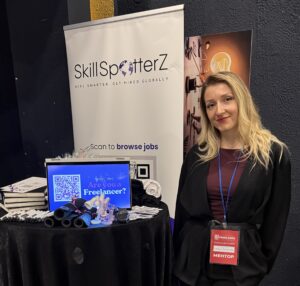
Biljana Dimitrievska, founder of SkillSpotterZ and Brand Ambassador for the Balkan eCommerce Summit, works with global eCommerce companies that want the opposite outcome: lean but high-performing teams where every remote hire is a growth lever, not a hidden cost.
Through her work matching operators, marketers, and specialists from emerging markets with brands in the US, UK, and EU, Biljana has seen the full spectrum of what can go wrong – and what it looks like when remote teams are designed to win from day one.
In this conversation, she shares the hiring traps leaders fall into, the signals that separate true A-players from “good on paper” candidates, and the role the Balkans can play in the next stage of global eCommerce growth.
Businesses are under pressure to scale fast while keeping costs efficient. From your work with global eCommerce companies, what are the most common mistakes leaders make when hiring remote talent and how can they avoid them?
The biggest mistake is treating remote hiring as a cost-cutting exercise instead of a performance strategy. Many leaders rush to hire quickly, rely only on CVs or freelance platforms, and skip proper skill validation and expectation setting. It feels efficient in the beginning, but becomes very expensive when you count rework, churn, and lost opportunities.
Another common issue is hiring without context – bringing in remote talent without clear ownership, KPIs, or understanding how their role connects to revenue or growth. You end up with people “busy” all week but nobody really accountable for a specific outcome.
These mistakes are avoidable by slowing down the right part of the process:
- Verify skills through real examples, not job titles or buzzwords
- Define success metrics and the scope of ownership before hiring
- Explain how this role fits into the bigger picture of the business
When companies focus on outcomes instead of hourly rates, remote hiring becomes a growth advantage, not a risk. The best remote teams are built around clarity, accountability, and long-term collaboration, not one-off tasks.
SkillSpotterZ emphasizes human-verified, skill-based hiring. What practical signals should founders look for to identify truly high-performing remote professionals in a global talent pool?
High performers show up very differently from “good on paper” candidates. Founders should look for a few concrete signals:
- Clarity in communication – They can explain not only what they did, but why they made certain decisions and how they would approach your specific situation.
- Ownership mindset – They speak in terms of results and impact (“I grew retention by…”, “We reduced costs by…”) rather than just listing tasks they were assigned.
- Pattern recognition – They’ve solved similar problems before and can recognise early signals: what usually breaks, what needs to be in place, which metrics really matter at each stage.
- Consistency and trust – A stable work history, long-term client relationships, and clear references are strong indicators. High performers tend to be invited back or promoted, not constantly starting from zero.
At SkillSpotterZ, we human-verify talent because these “soft” signals matter as much as hard skills. We look at how candidates think, communicate, and take responsibility.
A strong remote professional doesn’t need micromanagement – they bring structure, judgment, and accountability into the business. You can feel that in how they ask questions, how they talk about metrics, and how they describe past challenges.
As a Brand Ambassador for the Balkan eCommerce Summit, how do you hope to contribute in 2026 and what impact do you believe smart hiring can have on the region’s digital growth?
In 2026, my goal is to help bridge the gap between Balkan talent and global business expectations. The region has no shortage of skill – but often lacks access, visibility, and the right positioning to compete at the highest level.
I want to contribute in three main ways:
- Educating founders on how global companies actually hire and evaluate talent, so they can structure roles and teams that are attractive to international partners and investors.
- Helping professionals in the Balkans understand how to position themselves for international eCommerce roles – from portfolios and case studies to communication and mindset.
- Encouraging companies to build distributed teams that include the Balkans by design, not by accident. That means seeing the region as a strategic talent hub, not just a cheaper extension of their existing team.
Smart hiring can shift the region from being seen as “low-cost labour” to being recognised as a trusted growth partner in global eCommerce. When that happens at scale, it changes careers, companies, and entire ecosystems – from agencies and brands to logistics, fintech, and supporting services.
Many companies still hesitate to hire beyond their own borders. What are three concrete advantages that Balkan and emerging-market professionals can bring to eCommerce businesses in the US, UK, and EU?
First, strong commercial thinking. Many professionals from emerging markets are used to wearing multiple hats and thinking in terms of impact, not just role descriptions. They know how to connect their work to revenue, margins, and retention because they often worked in leaner environments where every decision counted.
Second, high adaptability. They’ve worked across markets, time zones, and fast-changing conditions – exactly the reality of modern eCommerce. They are used to figuring things out without a playbook, which is extremely valuable for brands testing new channels, markets, or product lines.
Third, diversity of ideas and loyalty. Coming from different cultures and experiences, they bring new angles on customer behaviour, messaging, and product-market fit. And when they are treated as partners and given real growth paths, Balkan professionals tend to stay longer and invest deeply in the company’s success.
These are not theoretical benefits – they directly affect performance, speed of execution, and long-term scalability. The right person in the right role can unlock a new geography, a new acquisition channel, or a more efficient operation.
For founders preparing their 2026 growth roadmap, what is one actionable hiring tactic they can implement this quarter to improve performance, scalability, or team retention?
Audit one role that’s currently slowing growth – and redesign it around outcomes, not tasks.
Instead of a vague list like “help with marketing” or “support operations,” define:
- The core business outcome this role owns (for example: improving repeat purchase rate, reducing support response time, improving listing quality).
- The 2–3 metrics that show success.
- The level of decision-making power you expect this person to have.
Then hire globally for that role with:
- Clear success metrics that are communicated during the hiring process.
- Real skill validation, ideally through a small, paid test project based on real scenarios from your business.
- A 90-day ownership plan that outlines what “great” looks like at the end of the first three months.
This one change helps founders hire better, onboard faster, and retain talent longer. Hiring isn’t just about filling seats – it’s about removing bottlenecks before they cost you momentum.
Want to get some actual practical advice out of Biljana Dimitrievska? Meet her in person at Balkan eCommerce Summit 2026. As Brand Ambassador of the event, she’ll be there to show you how you can build a successful remote-working team for your eCommerce business. Get your tickets today!