


The most common technical, strategic, and branding mistakes that prevent eCommerce stores from ranking – and how to turn SEO into a real revenue driver.
SEO is one of the most invested channels in eCommerce and, at the same time, one of the most misunderstood. As Krešimir Ćorluka points out, many companies continue to pour resources into content, links, and tools, yet struggle to see meaningful results. The problem often isn’t effort, but execution: small and large mistakes that quietly undermine visibility, rankings, and ultimately revenue.
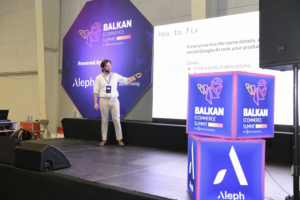
During the Balkan eCommerce Summit 2026, Krešimir took a direct look at the most common SEO mistakes that hold online stores back – from critical technical issues to strategic missteps in branding, content, and site structure. His session also challenged a common misconception: that SEO is just about traffic, rather than a core driver of business performance.
In this interview, we explore where eCommerce SEO typically breaks down, how recent changes in Google and AI search are reshaping the landscape, and what it really takes to turn SEO into a consistent source of growth and revenue.
Krešimir, during your session “9 mistakes I keep seeing on eCommerce stores which are destroying your rankings”, what were the main takeaways attendees gained from it?
You’ll learn how to avoid common errors which destroy chances of good rankings on Google and AI systems such as Perplexity, ChatGPT, Grok and others.
These errors range from huge ones which completely hide away the content on the website so it doesn’t have a chance to rank, to smaller ones which aren’t that catastrophic, but are nonetheless important to avoid.
These errors are usually of a technical nature, so the talk is quite important for dev teams. However, there are other errors which pertain to different facets, from UX teams to category managers.
Out of those 9 mistakes, which one is the most common – and the most expensive – for eCommerce businesses?
I think it would be rigid branding. A lot of errors flow out from issues with branding, be it of a technical nature, labeling categories or writing blogs which don’t make sense for the user and don’t increase revenue.
Many companies invest heavily in SEO but still don’t see results. From your experience, where do things usually break down?
There are a lot of issues with this. If your SEO team is not the first one you ask when doing a PR campaign, making changes to the website or creating migrations, you won’t be able to have good results.
Many times, I’ve seen companies invest in SEO and then not follow through with it by not resolving tickets put forth by the SEO team. The advice is too often ignored.
However, it might just be that you hired an SEO team which is not up to the task. Always ask for proven case studies before any collaboration.

How are recent changes in Google and AI-driven search impacting eCommerce SEO strategies today?
UCP might change things slightly, but basic SEO best practices are still very important. Links, good content, a good website structure and technical hygiene are still the way to go if you want to rank in AI.
You often talk about SEO as a profit center, not just traffic generation. What does that actually mean in practice for an online store?
It means that we’re not just writing blogs for the sake of it, we’re not just looking at how pages rank or how much traffic they have, but how much revenue they generate.
This is becoming increasingly important, although it’s become way harder to attribute SEO traffic to conversions.
We shouldn’t just increase rankings, but scale the revenue. SEO, conversion rate optimization and user experience are becoming more and more intertwined. Whoever doesn’t take note of this – loses.
As eCommerce continues to evolve across technology, customer behavior, operations, and digital growth, conversations like these will once again be a key part of Balkan eCommerce Summit 2027, where industry leaders, brands, and innovators from across the region will come together to exchange ideas, practical insights, and real-world experience.
More information about the upcoming edition is available at balkanecommerce.com