

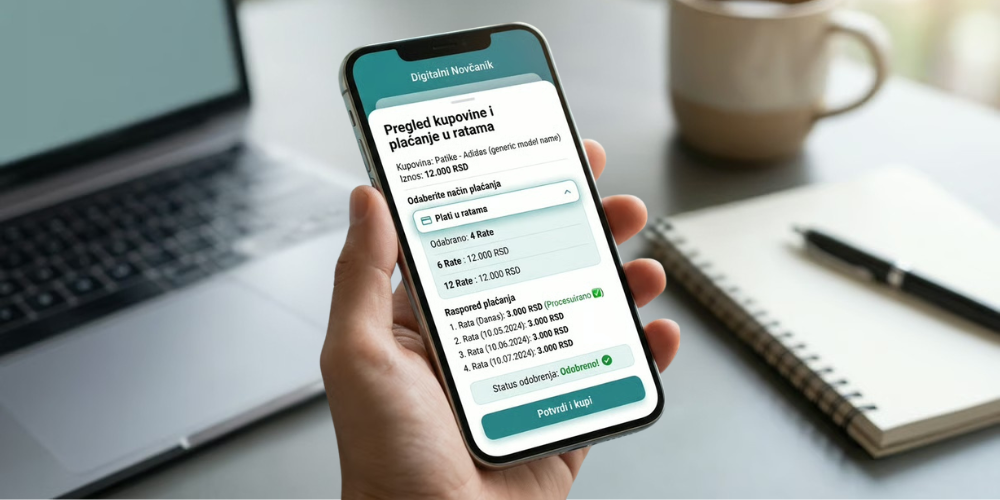
Buy Now, Pay Later (BNPL) is rapidly changing how consumers in the Balkan region approach online and in-store purchases. As an eCommerce strategist, you need to understand the current state and future direction of BNPL in this market to make informed decisions about infrastructure and partnerships. This article provides a comprehensive overview of BNPL adoption in the Balkans, offering insights into market trends, statistics, growth drivers, and consumer behavior. By understanding these dynamics, you can develop effective strategies to capitalize on the growing demand for flexible payment options in this unique market.
Table of Contents
- Understanding BNPL Adoption in the Balkan Region
- Buy now pay later statistics Across Balkan Countries
- BNPL Market Growth Drivers in the Western Balkans
- Current BNPL Trends Shaping the Balkan Payment Landscape
- Regional and International BNPL Providers in the Balkans
- Technical Infrastructure and Regulatory Compliance for BNPL Adoption
- Consumer Behavior and BNPL Adoption Patterns
- BNPL Data Insights: Usage Patterns and Transaction Volumes
- Frequently Asked Questions
Understanding BNPL Adoption in the Balkan Region
BNPL adoption in the Balkan region is accelerating among a young, digitally engaged population but remains uneven across six distinct markets – each with its own regulatory environment, banking maturity, and consumer readiness. Serbia leads in eCommerce activity and BNPL awareness, while Kosovo and Bosnia and Herzegovina remain in early experimentation phases. Success in this market requires a localized strategy built around limited credit history data, cash-preference habits, and fragmented regulatory frameworks.
Buy now, pay later is no longer just a Western European phenomenon. Across the Balkan region, a meaningful shift is underway in how consumers approach online and in-store purchases. If you’re an eCommerce operator or payment strategist with eyes on this market, understanding where BNPL stands today – and where it’s heading – is essential groundwork before you make any infrastructure or partnership decisions, especially given the evolving Balkan digital payment adoption trends.
What is BNPL and How Does It Work?
At its core, BNPL allows shoppers to complete a purchase immediately and repay the cost in structured installments – typically interest-free within the agreed window. The appeal is straightforward: it lowers the psychological barrier to purchase, increases average basket sizes, and gives consumers without traditional credit access a viable alternative. These dynamics are particularly relevant in the Balkans, where credit card penetration remains below the EU average and a significant portion of the population has historically relied on cash transactions.
What makes the Balkan market genuinely distinct from Western Europe is the combination of a young, digitally engaged population and a financial infrastructure still catching up to consumer demand. This distinctiveness is part of the larger CEE eCommerce landscape, which presents a unique blend of opportunity and disruption. Countries like Serbia, Albania, Kosovo, Montenegro, Bosnia and Herzegovina, and North Macedonia each present their own regulatory environments, banking maturity levels, and consumer readiness profiles. Serbia leads in eCommerce activity and BNPL awareness, while markets like Kosovo and Bosnia and Herzegovina are still in early experimentation phases. Urban centers across the region are where adoption is most visible, driven by younger shoppers already comfortable with mobile commerce and international payment platforms.
- Serbia: Leads the region in eCommerce activity and BNPL awareness, driven by higher smartphone penetration and urban digital adoption.
- Albania: Growing BNPL interest concentrated in urban centers, with early-stage local provider activity.
- Kosovo: Minimal current adoption but active startup experimentation targeting younger shoppers.
- Montenegro: Growing awareness through online retailers offering installment plans at checkout.
- Bosnia and Herzegovina: Nascent market characterized more by potential than current scale.
- North Macedonia: Exploratory phase with initial retailer engagement driven by consumer demand signals.
The opportunity here is real, but it requires a localized lens. A one-size-fits-all BNPL rollout that works in Germany or Sweden won’t automatically translate to Skopje or Tirana. The providers and merchants who will win in this space are those who understand the specific friction points – limited credit history data, cash-preference habits, and fragmented regulatory frameworks – and build their strategies around them rather than around assumptions imported from more mature markets.
Now that we’ve established the unique context of BNPL in the Balkans, let’s dive into the specific statistics that highlight its current adoption rates across different countries in the region.
Buy now pay later statistics Across Balkan Countries
Granular, country-level BNPL data for the Balkans is still emerging, which itself tells you something important about the market’s maturity. Unlike Western Europe, where providers like Klarnapublish detailed transaction reports and market research firms track adoption quarterly, the Western Balkans lack a centralized data infrastructure for fintech metrics. Directional indicators are available, though, and they paint a picture of a market in early but accelerating growth.
| Country | Market Maturity | Key Local Provider | Primary Adoption Driver | Data Availability |
|---|---|---|---|---|
| Serbia | Most developed | Domestic fintech startups | Developed eCommerce ecosystem, smartphone penetration | Limited but directional |
| Albania | Nascent, growing | NOA | Urban digital adoption in Tirana | Not publicly available |
| Bosnia and Herzegovina | Nascent | None established | Merchant interest outpacing consumer products | Not widely reported |
| Kosovo | Minimal, experimental | IBAS | Younger shopper appetite, startup activity | Scarce |
| Montenegro | Growing awareness | None established | Online retailer installment offerings, cross-border exposure | Scarce |
| North Macedonia | Exploratory | None established | Individual merchant decisions, consumer demand signals | Scarce |
Serbia consistently registers the highest BNPL adoption rates in the region. This is driven by a relatively developed eCommerce ecosystem, higher smartphone penetration, and a younger urban consumer base exposed to international BNPL concepts through cross-border shopping.
Albania presents a niche but growing picture. BNPL adoption is concentrated in urban areas – primarily Tirana – where consumers are more familiar with digital payment alternatives. NOA has been identified as a local BNPL provider operating in the Albanian market, though detailed data on its transaction volumes and user base is not publicly available. The market is nascent, but early adopters in urban centers are already primed for expanded offerings as infrastructure matures.
In Bosnia and Herzegovina, the BNPL landscape is best described as nascent. Fintech companies are gradually introducing installment-based payment solutions tailored to eCommerce, but comprehensive adoption statistics are not yet widely reported. The market is characterized more by potential than by current scale, with merchant interest outpacing available consumer-facing products.
Kosovo shows minimal BNPL adoption at present, though not for lack of interest. Startups are actively experimenting with models designed to appeal to younger shoppers, and IBAS has been identified as a local provider in the market. The challenge in Kosovo is less about consumer appetite and more about the infrastructure and regulatory clarity needed to scale those early experiments into sustainable businesses.
Montenegro is experiencing growing awareness, particularly through online retailers that have begun offering installment plans as a checkout feature. Concrete adoption statistics are scarce, but merchant-side interest is increasing as eCommerce volumes rise and consumers encounter BNPL options through cross-border shopping on international platforms.
North Macedonia is seeing initial retailer engagement with deferred payment options, responding to consumer demand signals rather than established BNPL infrastructure. The market is in an exploratory phase, with no dominant local provider yet established and most activity driven by individual merchant decisions rather than coordinated fintech rollouts.
Across all six markets, the consistent challenge for analysts and strategists is the limited data collection and reporting by local providers, the varied regulatory landscapes that affect how BNPL products are classified and disclosed, and the evolving nature of the sector itself. If you’re building a market entry case, supplement available data with primary research – merchant surveys, consumer focus groups, and direct engagement with local fintech ecosystems will give you the ground-level intelligence that published reports can’t yet provide.
With a clearer picture of the current BNPL adoption rates across the Balkan countries, it’s crucial to understand the underlying factors driving this growth. Let’s explore the key drivers that are shaping the BNPL market in the Western Balkans.
BNPL Market Growth Drivers in the Western Balkans
Understanding what’s actually pushing BNPL market growth in this region helps you prioritize where to invest and what to build. The drivers here are structural, demographic, and behavioral – and they’re reinforcing each other in ways that suggest the growth trajectory will steepen over the next several years.
- eCommerce expansion: As more Balkan consumers shift purchasing behavior online – accelerated significantly by the post-2020 digital adoption wave – demand for flexible checkout options naturally follows. This trend is visible across the entire region, with countries like Bulgaria seeing significant changes in its eCommerce trends. Merchants competing with international platforms are under pressure to offer payment experiences that match what consumers encounter when shopping on global sites. BNPL is increasingly part of that expectation, and merchants who don’t offer it risk losing sales to competitors who do. This growth is not limited to the Western Balkans, with neighboring countries also showing significant eCommerce market potential, such as in Greece.
- Smartphone penetration: Mobile internet usage across the Western Balkans has grown substantially, and a large share of online shopping now happens on mobile devices. BNPL products optimized for mobile checkout – with fast approval flows and minimal friction – are well-positioned to capture this behavior. The demographic driving this is primarily consumers between 18 and 35, who are digital natives and significantly more open to non-traditional payment methods than older cohorts. This age group is also the most likely to have limited credit history, making BNPL’s alternative credit model particularly relevant to their purchasing needs.
- Limited traditional credit access: In markets where credit card ownership is below the EU average and bank lending criteria can be restrictive, BNPL fills a genuine gap. It gives consumers purchasing flexibility without requiring a formal credit relationship with a bank. For merchants, this translates directly into reduced cart abandonment and higher conversion rates – measurable outcomes that make the business case for BNPL integration compelling regardless of market maturity.
- Improving digital payment infrastructure: The growing presence of digital payment infrastructure – including mobile wallets, open banking APIs, and improved payment gateway capabilities – is lowering the technical barriers to BNPL deployment. As the underlying plumbing improves, more merchants can integrate BNPL at checkout without significant development overhead, which accelerates supply-side adoption and, in turn, consumer exposure to the product. This infrastructure improvement is happening at different speeds across the six markets, which is why Serbia is pulling ahead while other countries remain in earlier stages.
As eCommerce expands, smartphone usage increases, and digital payment infrastructure improves, several key trends are emerging in the Balkan BNPL landscape. Let’s examine these trends to understand how they are shaping the future of payments in the region.
Current BNPL Trends Shaping the Balkan Payment Landscape
The BNPL landscape in the Balkans is not static. Several distinct trends are emerging that will shape how providers, merchants, and consumers interact with these products over the next two to three years. If you’re planning a market entry or an expansion of existing payment offerings, these are the dynamics you need to track closely.
- Digital wallet integration: The most significant trend is the integration of BNPL functionality within digital wallet ecosystems. As mobile wallets gain traction across the region, consumers increasingly expect to access installment payment options directly within their preferred digital payment environment. This convergence reduces friction and increases the likelihood of BNPL usage at the point of sale. Providers that can embed their services within existing wallet infrastructure – rather than requiring a separate app or account – will have a meaningful adoption advantage over those that operate as standalone products.
- Localization of product design: International providers entering the Balkans are discovering that their standard product configurations don’t always map cleanly onto local consumer behavior. Balkan shoppers, particularly in markets with stronger cash traditions, often prefer shorter repayment windows and lower installment counts than their Western European counterparts. Fintech companies building for this market from the ground up are designing products with these preferences in mind – offering two- or three-installment plans rather than the six- or twelve-installment structures common elsewhere. This isn’t a compromise; it’s a deliberate product decision that reflects genuine consumer preference data.
- Merchant-level payment innovation: Retailers across Serbia, Albania, and North Macedonia are beginning to use BNPL not just as a checkout feature but as an active promotional tool – offering zero-interest installment plans during peak shopping periods to drive conversion. This mirrors tactics that have proven effective in more mature BNPL markets and signals that merchant sophistication around the product is growing faster than the raw adoption numbers might suggest.
- Risk-aware product development: Given the limited credit bureau infrastructure in several Balkan countries, BNPL providers are investing in alternative credit assessment models – using behavioral data, transaction history, and device signals to make real-time approval decisions. This is both a technical challenge and a competitive differentiator. The providers who solve it most effectively will be best positioned to scale, because they’ll be able to approve more consumers without taking on disproportionate default risk in markets where traditional credit scoring is unreliable or unavailable.
As these trends continue to evolve, it’s important to know who the key players are in the Balkan BNPL market. Let’s take a look at the regional and international providers that are currently operating in the region.
Regional and International BNPL Providers in the Balkans
The provider landscape in the Balkans is a mix of homegrown solutions and cautious international expansion, with the balance varying significantly by country. Understanding who is operating where — and how they’re competing — is essential context for any market entry or partnership strategy.
| Provider | Type | Market(s) Served | Competitive Advantage | Key Challenge |
|---|---|---|---|---|
| NOA | Local | Albania | Local regulatory knowledge, existing merchant relationships | Scale and capital |
| IBAS | Local | Kosovo | Local regulatory knowledge, consumer behavior understanding | Scale and capital |
| Domestic fintech startups | Regional | Serbia | Developed eCommerce ecosystem, installment-based checkout options | Brand recognition |
| Klarna | International | Not yet at scale in Western Balkans | Global brand, capital, technology | Regulatory complexity, infrastructure investment |
| Afterpay | International | Not yet at scale in Western Balkans | Global brand, capital, technology | Regulatory complexity, smaller market sizes |
On the local side, NOA in Albania and IBAS in Kosovo represent early-stage regional providers that have built products specifically for their domestic markets. These companies have the advantage of local regulatory knowledge, existing merchant relationships, and an understanding of consumer behavior that international players typically lack at launch. Their challenge is scale – without the capital and brand recognition of global platforms, growing merchant networks and consumer bases requires a deliberate, relationship-driven approach that takes time to compound.
Serbia’s more developed eCommerce ecosystem has attracted greater provider activity, with both domestic fintech startups and regional payment processors beginning to offer installment-based checkout options. Bosnia and Herzegovina, Montenegro, and North Macedonia are seeing gradual entry by fintech companies introducing BNPL-adjacent products, though none of these markets yet has a dominant local provider with meaningful market share.
International platforms like Klarna and Afterpay have not yet made significant inroads into the Western Balkans, largely due to regulatory complexity, smaller market sizes, and the infrastructure investment required to operate compliantly across multiple jurisdictions. As the region’s eCommerce volumes grow and regulatory frameworks mature, international interest will increase. When global players do enter, local providers will need to compete on market knowledge, merchant integration depth, and consumer trust – areas where incumbency provides a real and defensible advantage. For merchants evaluating BNPL partnerships today, local or regional solutions offer more practical coverage and reliability than international alternatives that aren’t yet available at scale.
With a mix of local and international players in the market, it’s crucial to understand the technical and regulatory landscape that affects BNPL adoption. Let’s delve into the infrastructure and compliance requirements for BNPL in the Balkans.
Technical Infrastructure and Regulatory Compliance for BNPL Adoption
The infrastructure and regulatory environment is where many BNPL ambitions in the Balkans run into practical friction. If you’re building or evaluating a BNPL product for this region, these are the constraints you need to plan around – not obstacles to avoid, but realities to engineer for from the start.
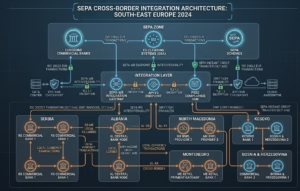
- Local payment network integration: On the technical side, the core requirement is reliable integration with local payment networks and eCommerce platforms. This means robust API connectivity, secure data handling, and the ability to process transactions across multiple currencies – since not all Western Balkan countries use the euro. Payment gateway maturity varies by country, and providers need to assess integration complexity on a market-by-market basis rather than assuming a uniform technical environment across the region.
- SEPA integration progress: SEPA integration is a particularly important consideration for the region’s longer-term trajectory. Several Western Balkan countries are progressing toward SEPA membership, which would significantly streamline cross-border euro payments and reduce transaction costs. For BNPL providers, SEPAaccess means lower operational costs for cross-border installment processing and greater interoperability with European payment infrastructure. Serbia, Albania, and North Macedonia have all expressed interest in SEPAparticipation as part of broader EU integration efforts, and progress in this area will directly benefit the BNPLecosystem by reducing the friction and cost of operating across borders.
- Regulatory compliance requirements: The Balkans present a fragmented regulatory landscape – each country has its own consumer credit laws, data privacy requirements, and financial services licensing frameworks. BNPLproducts that involve deferred credit are subject to consumer protection regulations that differ meaningfully across the six markets. Providers must invest in localized legal and compliance infrastructure, including Know Your Customer (KYC) protocols, Anti-Money Laundering (AML) procedures, and credit risk management systems that can operate within each country’s specific requirements. This is not a trivial investment, but it is a necessary one for any provider serious about operating at scale in the region rather than running a limited pilot.
Beyond the technical and regulatory aspects, understanding consumer behavior is crucial for successful BNPL adoption. Let’s explore the consumer behavior and adoption patterns that are shaping the BNPL landscape in the Balkans.
Consumer Behavior and BNPL Adoption Patterns
Consumer behavior in the Balkans reflects a market in transition. The traditional preference for cash – still significant across rural areas and older demographics – is coexisting with a rapidly growing appetite for digital payment options among younger, urban consumers. BNPL sits at the intersection of these two realities, offering a bridge between the familiarity of installment-based purchasing (which has long existed in the region through in-store credit arrangements) and the convenience of digital commerce. That cultural familiarity with installments is actually a tailwind for BNPL adoption – the concept isn’t foreign, only the digital delivery mechanism is new.

- Highest-adoption demographic: Consumers between 18 and 35, particularly those living in urban centers and shopping primarily via mobile devices. This cohort is comfortable with app-based financial products, has lower attachment to traditional banking relationships, and actively seeks payment flexibility when making discretionary purchases. In Serbia, this demographic is already driving measurable BNPL usage. In markets like Kosovo and Albania, the same demographic exists but is still in the awareness-building phase, where provider education and merchant visibility will determine how quickly adoption accelerates.
- Cash-versus-digital dynamic: In Bosnia and Herzegovina and North Macedonia, cash on delivery remains a popular eCommerce payment method, reflecting both consumer trust issues with online payments and limited card penetration. BNPL providers entering these markets need to account for this preference – either by offering hybrid models that accommodate cash repayment or by investing in consumer education that builds confidence in digital installment products. The shift toward digital is happening, but it requires active facilitation rather than passive availability of a checkout option.
To gain a deeper understanding of BNPL adoption in the Balkans, let’s analyze the available data insights, including usage patterns and transaction volumes.
BNPL Data Insights: Usage Patterns and Transaction Volumes
Comprehensive, region-specific BNPL transaction data for the Balkans is still limited, but the patterns emerging align with broader global trends – with local nuances that have direct implications for how you structure your product and merchant strategy.
- Higher average order values: Globally, BNPL transactions consistently show higher average order values compared to standard card or cash payments. The logic is intuitive: when consumers can spread a cost over time, they’re more willing to commit to higher-priced items. In the Balkan context, this dynamic is particularly relevant for categories like consumer electronics, home appliances, fashion, and sporting goods – all growing segments in regional eCommerce. Merchants in these categories have the most to gain from BNPL integration, both in terms of conversion rate improvement and basket size uplift, making them the natural first targets for provider merchant acquisition efforts.
- Mid-ticket purchase concentration: Usage pattern analysis from comparable emerging markets suggests that BNPL adoption tends to concentrate initially around mid-ticket purchases – items in the range of €50 to €300 – before expanding upward as consumer confidence in the product grows. This price point aligns well with the most active eCommerce categories in the Balkans, suggesting strong product-market fit even in the early adoption phase. Providers that anchor their initial merchant partnerships in these categories will build the transaction volume and consumer familiarity needed to expand into higher-ticket segments over time.
- Repeat usage and habit formation: Repeat usage rates are another important metric. In more mature BNPLmarkets, a significant share of users become habitual – returning to BNPL as their default payment method for online purchases. Building this habit requires a seamless first-use experience, which puts pressure on providers to optimize their onboarding and approval flows. For the Balkan market, where many consumers will be encountering BNPL for the first time, that initial transaction experience is disproportionately important in determining long-term retention. A clunky approval process or confusing repayment interface at first use can permanently suppress repeat adoption in a market where word-of-mouth still carries significant weight.
- Transaction volume growth trajectory: Transaction volume data, while not yet publicly reported at a granular level for most Balkan countries, is expected to grow as eCommerce penetration increases and merchant adoption of BNPL checkout options expands. The combination of a young consumer base, rising digital payment infrastructure, and growing merchant awareness creates the conditions for compounding growth – the kind of trajectory that rewards early movers who establish merchant relationships and consumer trust before the market becomes crowded with both local and international competitors.
As you consider implementing BNPL in the Balkan region, it’s natural to have questions about its adoption, providers, and regulatory challenges. Let’s address some frequently asked questions to provide further clarity.
Frequently Asked Questions
- Which Balkan country has the highest BNPL adoption rate? Serbia currently leads the region in BNPL adoption, driven by its more developed eCommerce ecosystem, higher smartphone penetration, and a younger urban consumer base with greater exposure to digital payment alternatives through cross-border shopping.
- Are international BNPL providers like Klarna operating in the Balkans? Not at significant scale yet. International platforms like Klarna and Afterpay have not made major inroads into the Western Balkans due to regulatory complexity, smaller market sizes, and infrastructure requirements. Local and regional providers currently dominate the available offerings in each country.
- What local BNPL providers are operating in the region? NOA has been identified as a local BNPL provider in Albania, and IBAS operates in Kosovo. Serbia has domestic fintech activity in the installment payments space, while Bosnia and Herzegovina, Montenegro, and North Macedonia are seeing gradual fintech entry, though no dominant local provider has yet emerged in those markets.
- How does SEPA integration affect BNPL services in the Balkans? SEPA membership would significantly reduce cross-border payment costs and improve interoperability with European payment infrastructure. Serbia, Albania, and North Macedonia are progressing toward SEPA participation, which would lower operational costs for BNPL providers and make cross-border installment processing more efficient and commercially viable.
- What product categories see the highest BNPL usage in the region? Consumer electronics, home appliances, fashion, and sporting goods are the categories most aligned with BNPL usage patterns in the Balkans. These mid-to-high ticket categories benefit most from the ability to spread costs over time, and they represent the fastest-growing segments in regional eCommerce.
- What are the biggest regulatory challenges for BNPL providers in the Balkans? The fragmented regulatory landscape is the primary challenge. Each country has distinct consumer credit laws, data privacy requirements, and financial services licensing frameworks. Providers must build localized compliance infrastructure – including KYC, AML, and credit risk management systems – for each market they enter, which requires meaningful legal and operational investment.
- Which demographic group is driving BNPL adoption in the Balkans? Consumers aged 18 to 35, particularly those in urban areas shopping via mobile devices, show the highest adoption rates. This cohort is comfortable with app-based financial products, has limited traditional credit history, and actively seeks payment flexibility for discretionary purchases.
- How does the cash preference in some Balkan markets affect BNPL growth? Cash on delivery remains popular in markets like Bosnia and Herzegovina and North Macedonia, reflecting limited card penetration and consumer trust issues with online payments. BNPL providers need to address this through consumer education and, in some cases, hybrid repayment models that accommodate cash-based installment options alongside digital alternatives.
- What KPIs should merchants track when implementing BNPL at checkout? Focus on average order value uplift, checkout conversion rate improvement, cart abandonment reduction, and repeat purchase rate among BNPLusers. These four metrics give you a clear picture of both the immediate revenue impact and the longer-term customer retention value of your BNPLintegration.
- Is now a good time to enter the Balkan BNPL market as a provider or merchant? Yes – the early-mover advantage is real. Growing eCommerce volumes, a young digitally engaged consumer base, and limited competition from established international players like Klarna and Afterpay create a window for providers and merchants who move now to establish merchant relationships, consumer trust, and brand recognition before the market matures and competition intensifies.
References
- World Bank – Digital Financial Services in the Western Balkans. BNPL adoption landscape; cash-on-delivery dominance in BiH and North Macedonia; fintech entry patterns.
- European Central Bank – Buy Now, Pay Later: A Cross-Country Analysis. BNPL concentration in €50–€300 mid-ticket purchases in emerging markets; 18–35 demographic primary adopters.
- Klarna – Global BNPL Landscape. International BNPL platforms (Klarna, Afterpay) have limited presence in Western Balkans due to regulatory complexity and infrastructure requirements.
- European Commission – Consumer Credit Directive. Regulatory basis for BNPL compliance in EU member states; Serbian and Albanian alignment progress.